Math Drills
Commutative, Associative, and Distributive Laws
C-1Word Problems
You can hand this out in class or share it on social media for free. Usage rules
What this worksheet covers
- Topic
- Rules of Calculation
- Worksheet
- Commutative, Associative, and Distributive Laws
The expression is regrouped before any answer is found. Chain of Addition (Commutative and Associative) and Chain of Multiplication (Commutative and Associative) clear away the pairs that gather neatly, while Parentheses in Addition and Subtraction (Associative Law) and Parentheses in Multiplication and Division (Associative Law) redraw where the parentheses cut. Taking out a shared figure, splitting a number close to 100, and a word problem about cost follow.
Read more
Commutative Law, Multiplication (Fill in the Blank), which merely swaps the order of the factors, is settled by copying a figure across, and the addition side carries the same shape. Round Numbers, Addition (Fill in the Blank), which moves the amount that made a figure round, and Doubling, Halving, Multiplication (Fill in the Blank), which doubles one side and halves the other to make ten or a hundred, leave the regrouping motionless if the box keeps the original figure.
In Expressions Using a Box a scene is turned into an expression with the unknown place left as a box. What is gained here is the judgement that the order settled in Order of Operations with Whole Numbers may be shifted so long as the answer does not move.
- Distributive Law (Word Problems)5 questions
Questions & answers
Problems and answers on this worksheet
These are the problems in “Rules of Calculation”, shown with their answers.
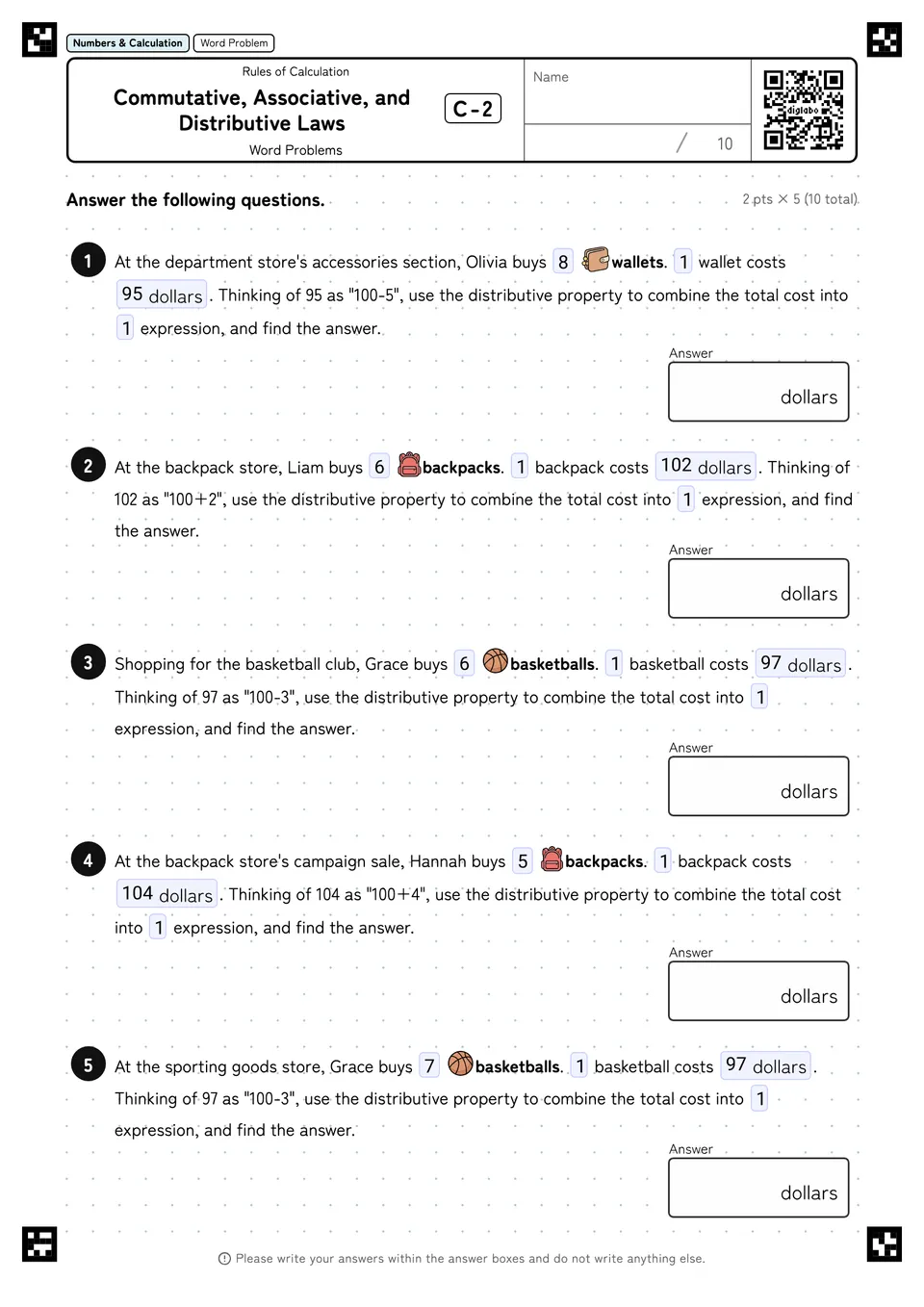
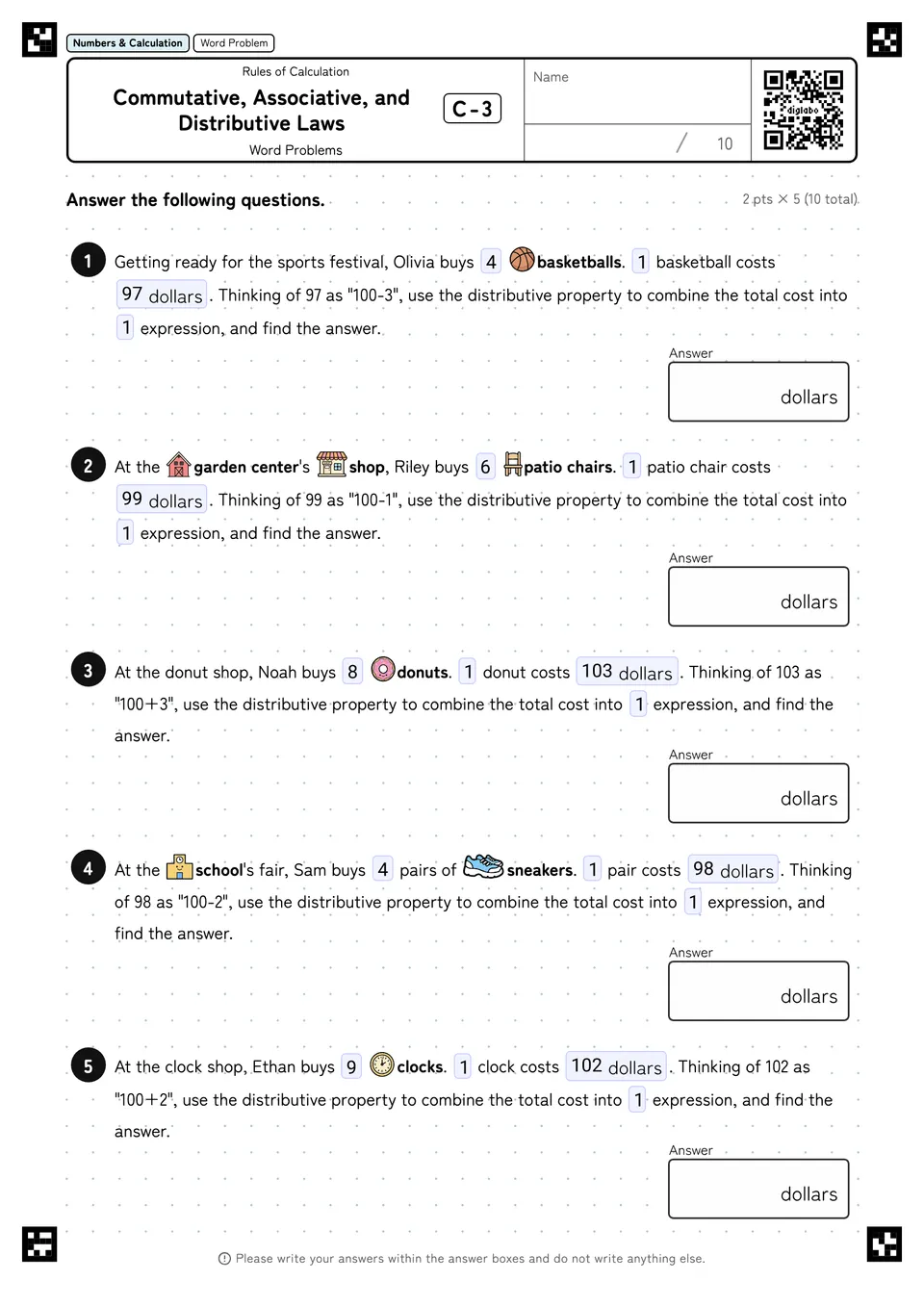
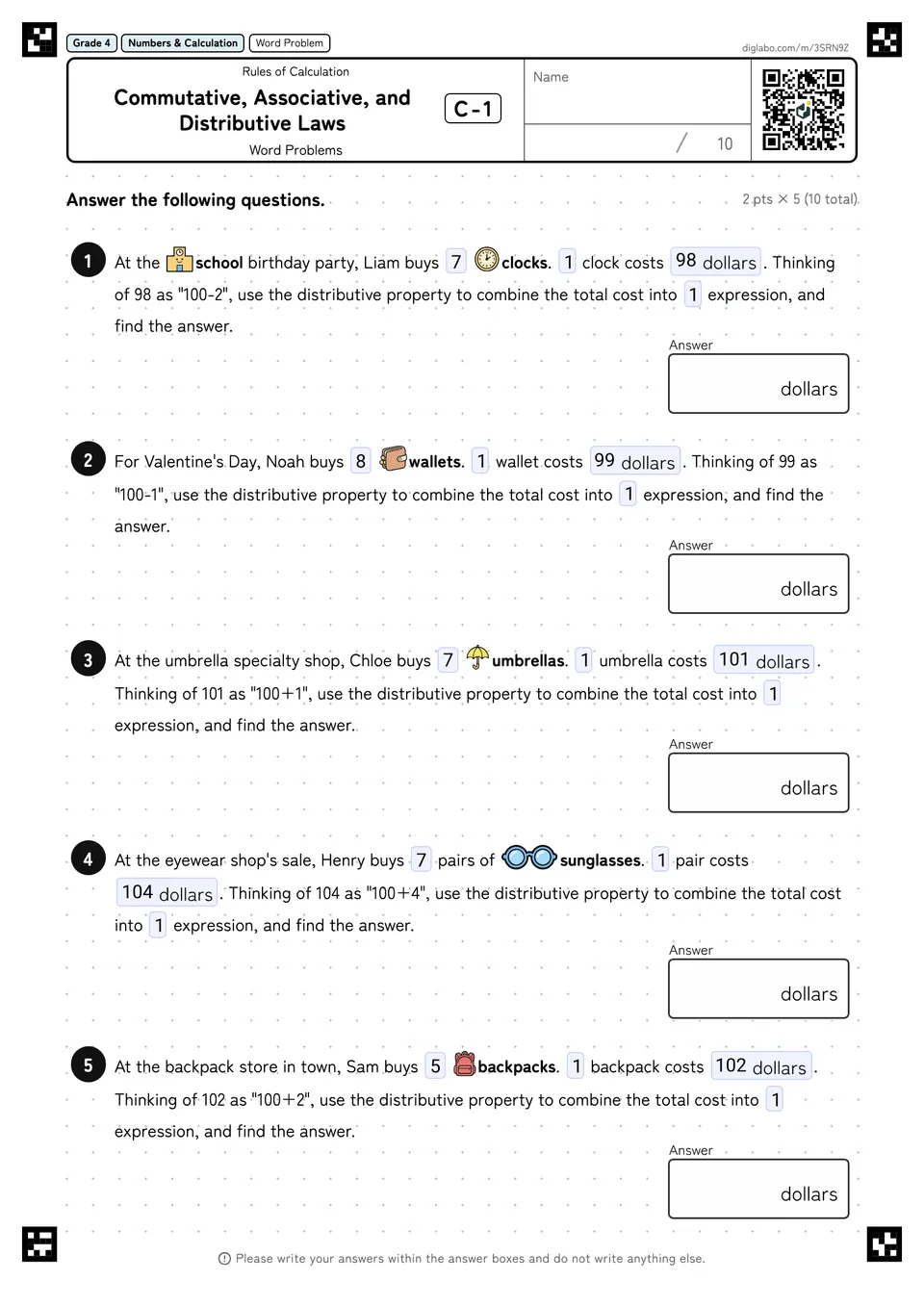
(1)At the school birthday party, Liam buys 7 clocks. 1 clock costs 98 dollars. Thinking of 98 as "100-2", use the distributive property to combine the total cost into 1 expression, and find the answer. Answer □
Answer: 686dollars
(2)For Valentine's Day, Noah buys 8 wallets. 1 wallet costs 99 dollars. Thinking of 99 as "100-1", use the distributive property to combine the total cost into 1 expression, and find the answer. Answer □
Answer: 792dollars
(3)At the umbrella specialty shop, Chloe buys 7 umbrellas. 1 umbrella costs 101 dollars. Thinking of 101 as "100+1", use the distributive property to combine the total cost into 1 expression, and find the answer. Answer □
Answer: 707dollars
(4)At the eyewear shop's sale, Henry buys 7 pairs of sunglasses. 1 pair costs 104 dollars. Thinking of 104 as "100+4", use the distributive property to combine the total cost into 1 expression, and find the answer. Answer □
Answer: 728dollars
(5)At the backpack store in town, Sam buys 5 backpacks. 1 backpack costs 102 dollars. Thinking of 102 as "100+2", use the distributive property to combine the total cost into 1 expression, and find the answer. Answer □
Answer: 510dollars
What to do next
More worksheets in this unit
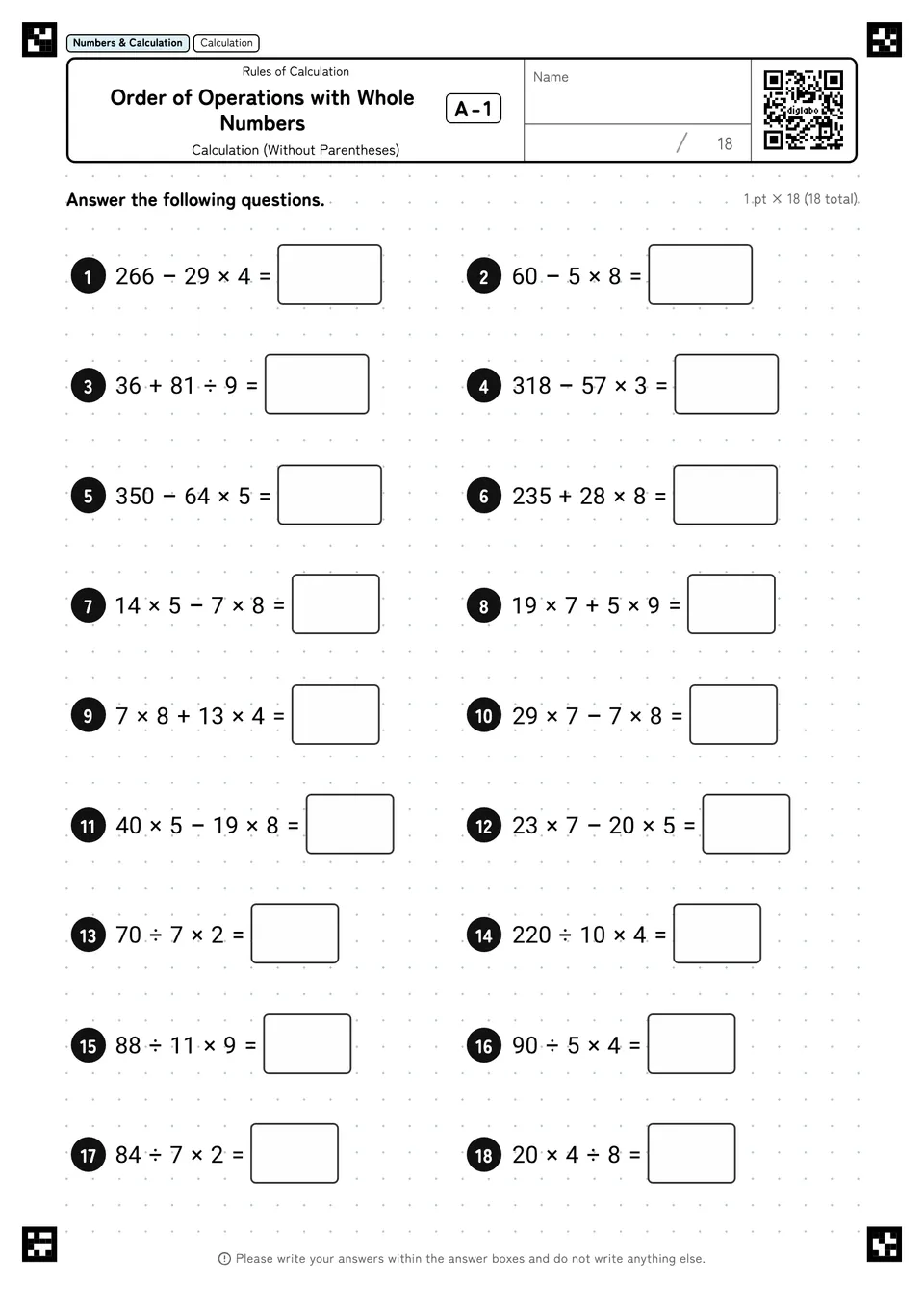
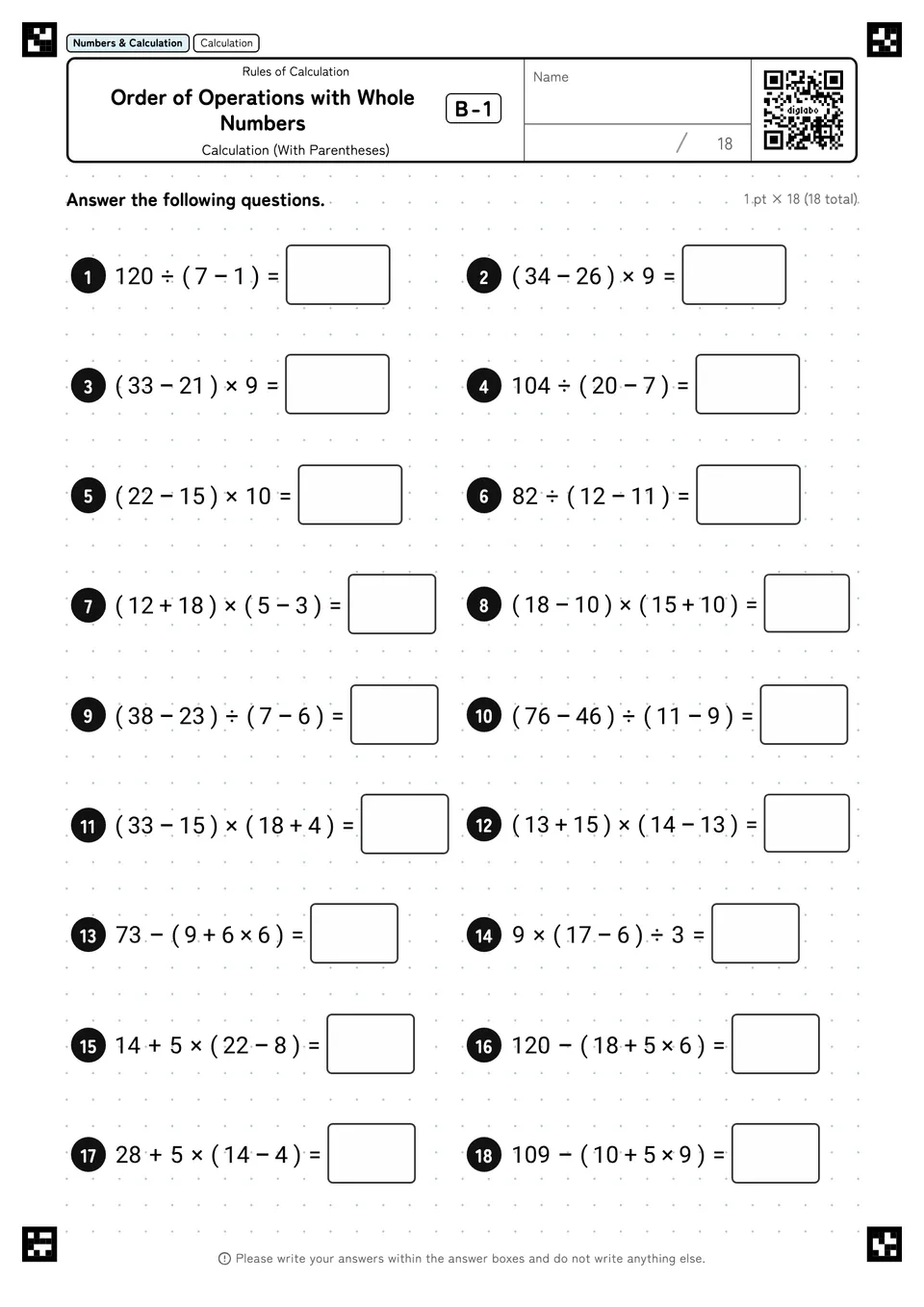 Order of Operations with Whole NumbersOrder of Operations with Whole Numbers Calculation (With Parentheses)
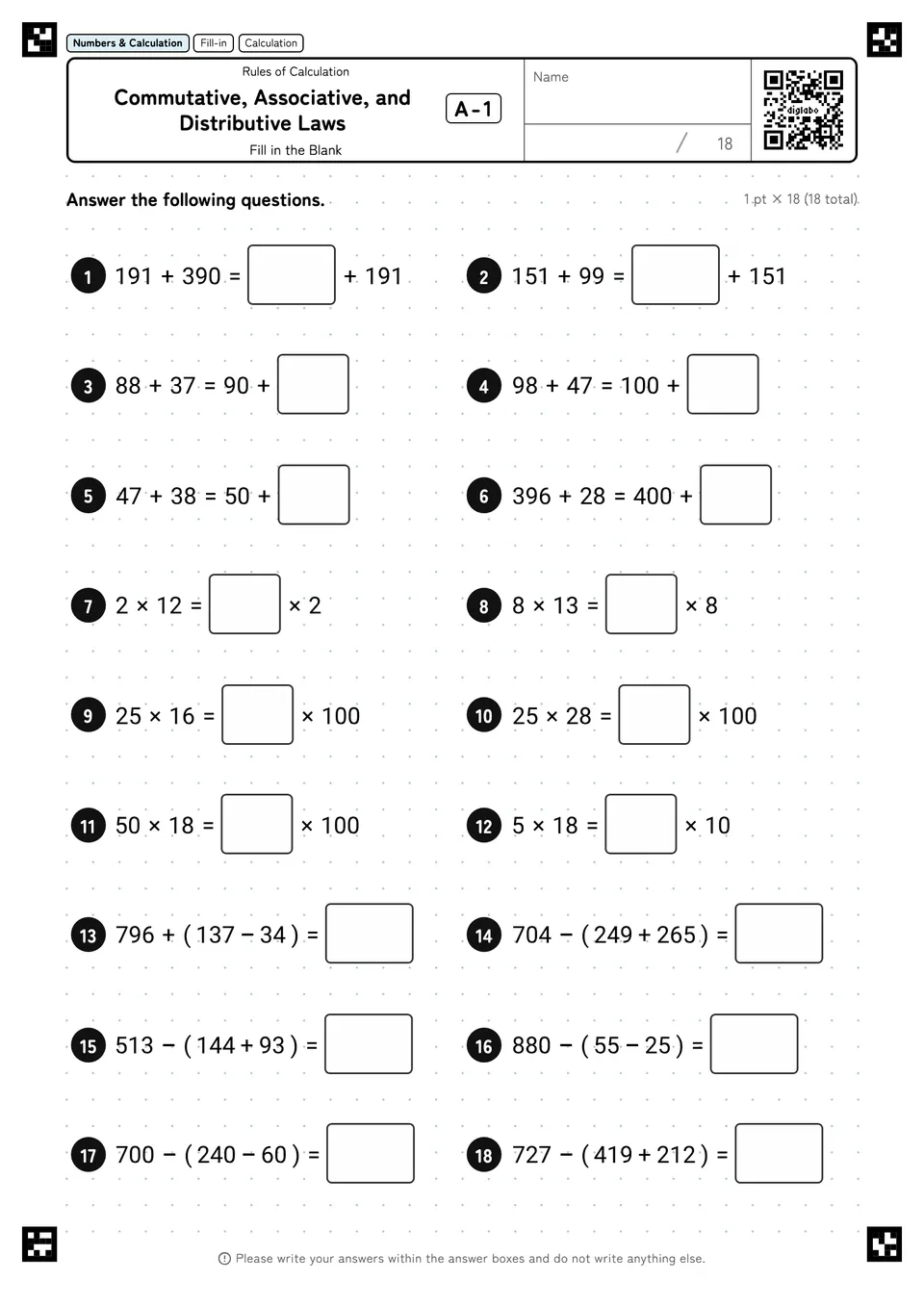 Commutative, Associative, and Distributive LawsCommutative, Associative, and Distributive Laws Fill in the Blank
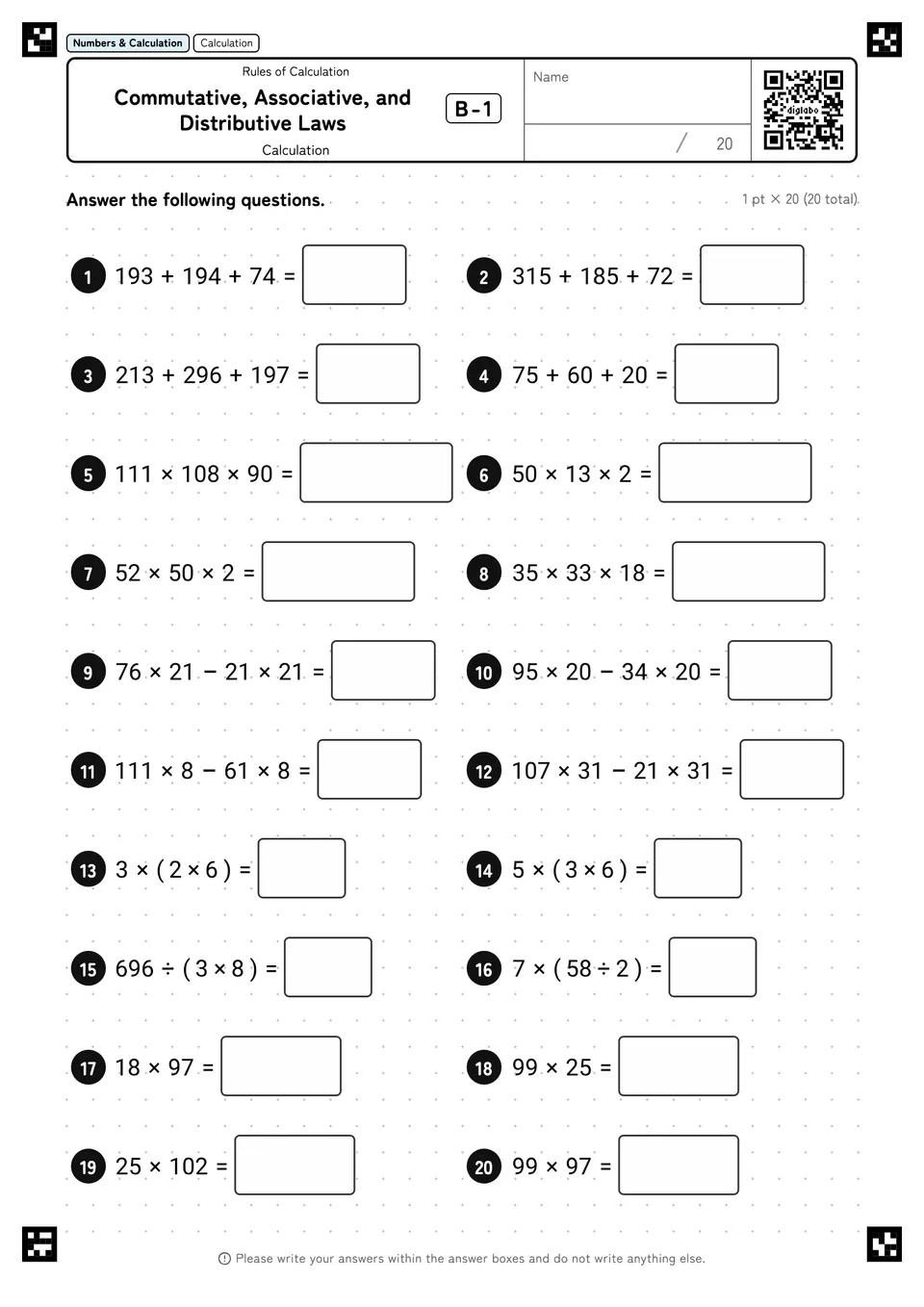 Commutative, Associative, and Distributive LawsCommutative, Associative, and Distributive Laws Calculation
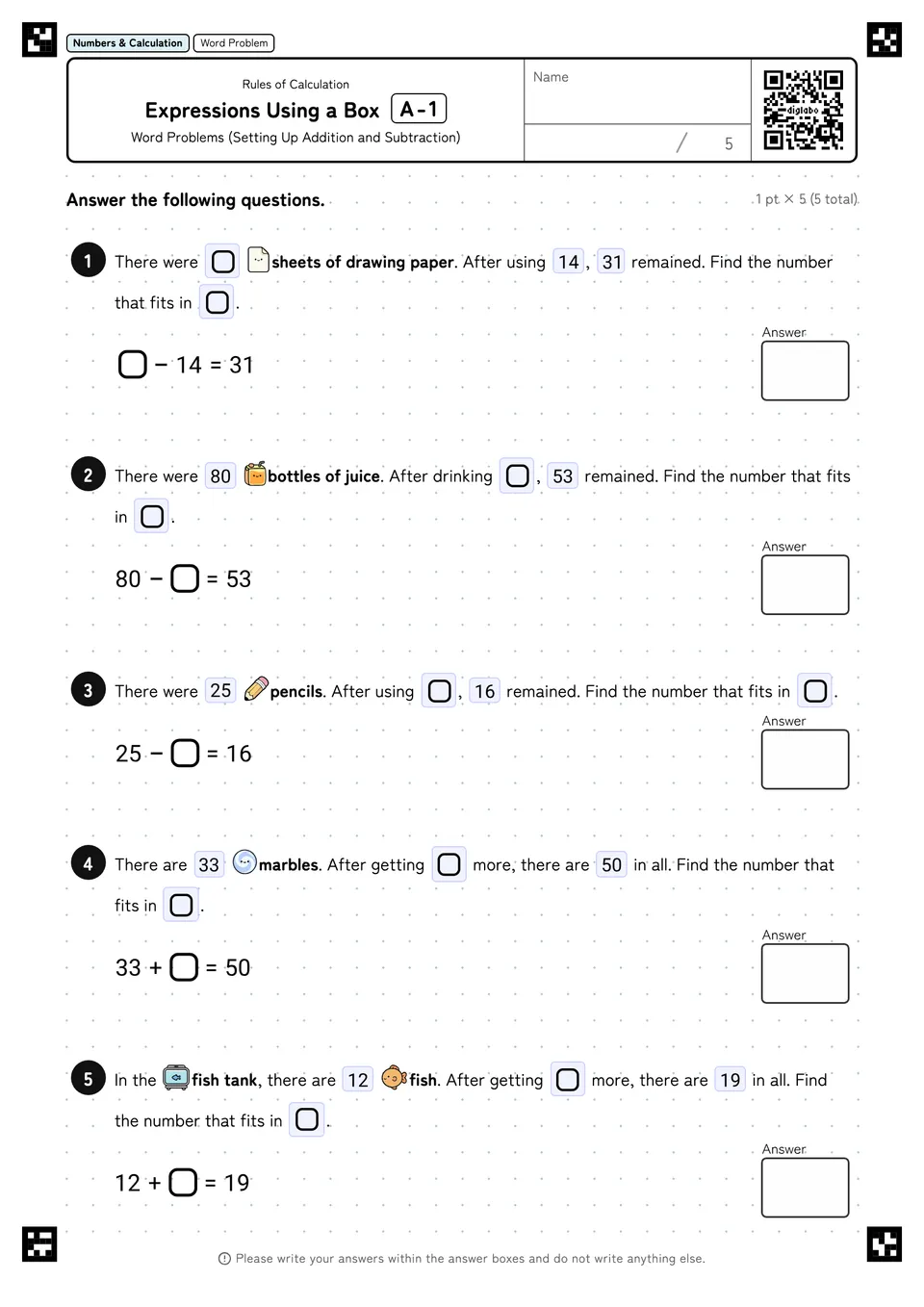 Expressions Using a BoxExpressions Using a Box Word Problems (Setting Up Addition and Subtraction)
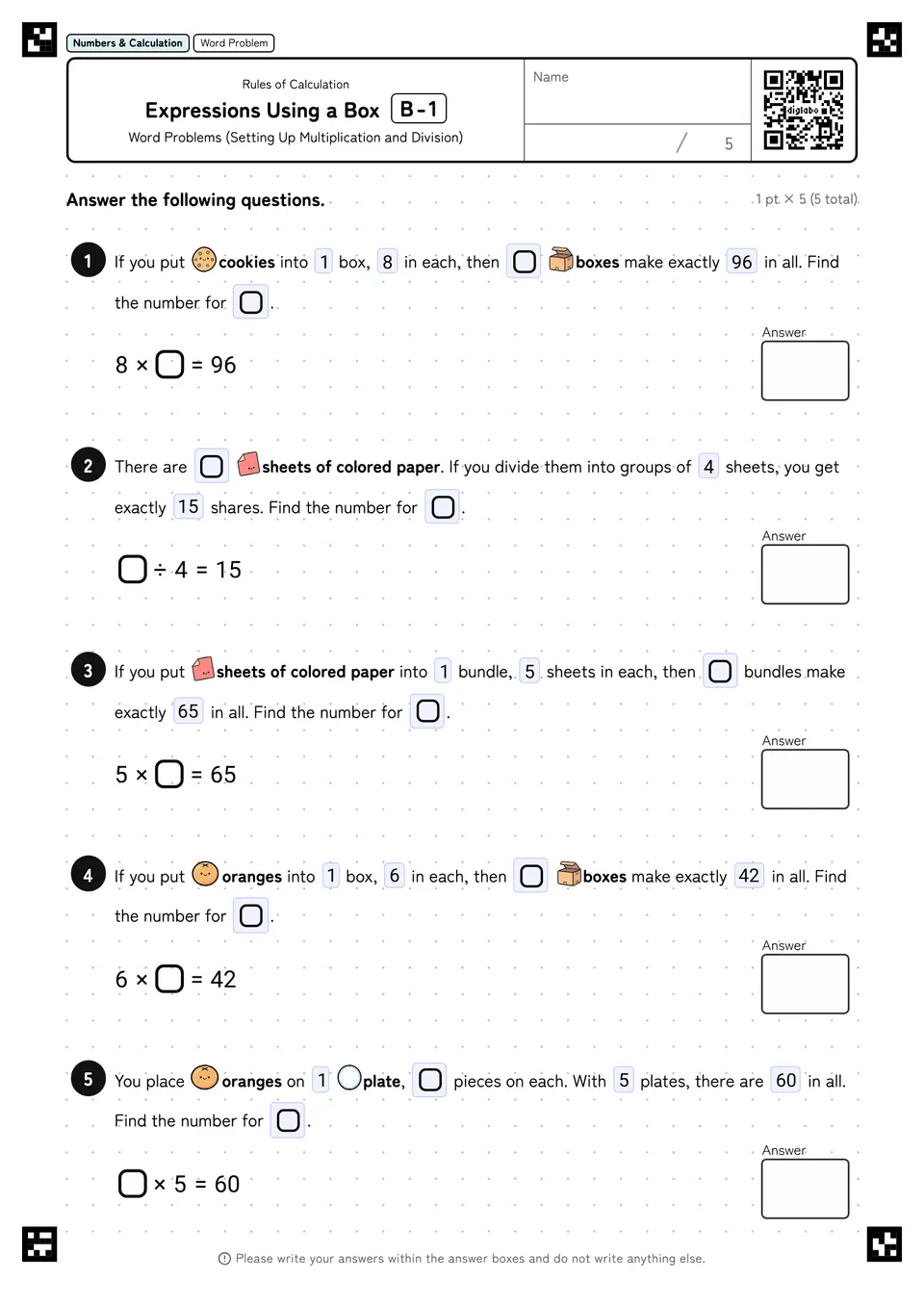 Expressions Using a BoxExpressions Using a Box Word Problems (Setting Up Multiplication and Division)
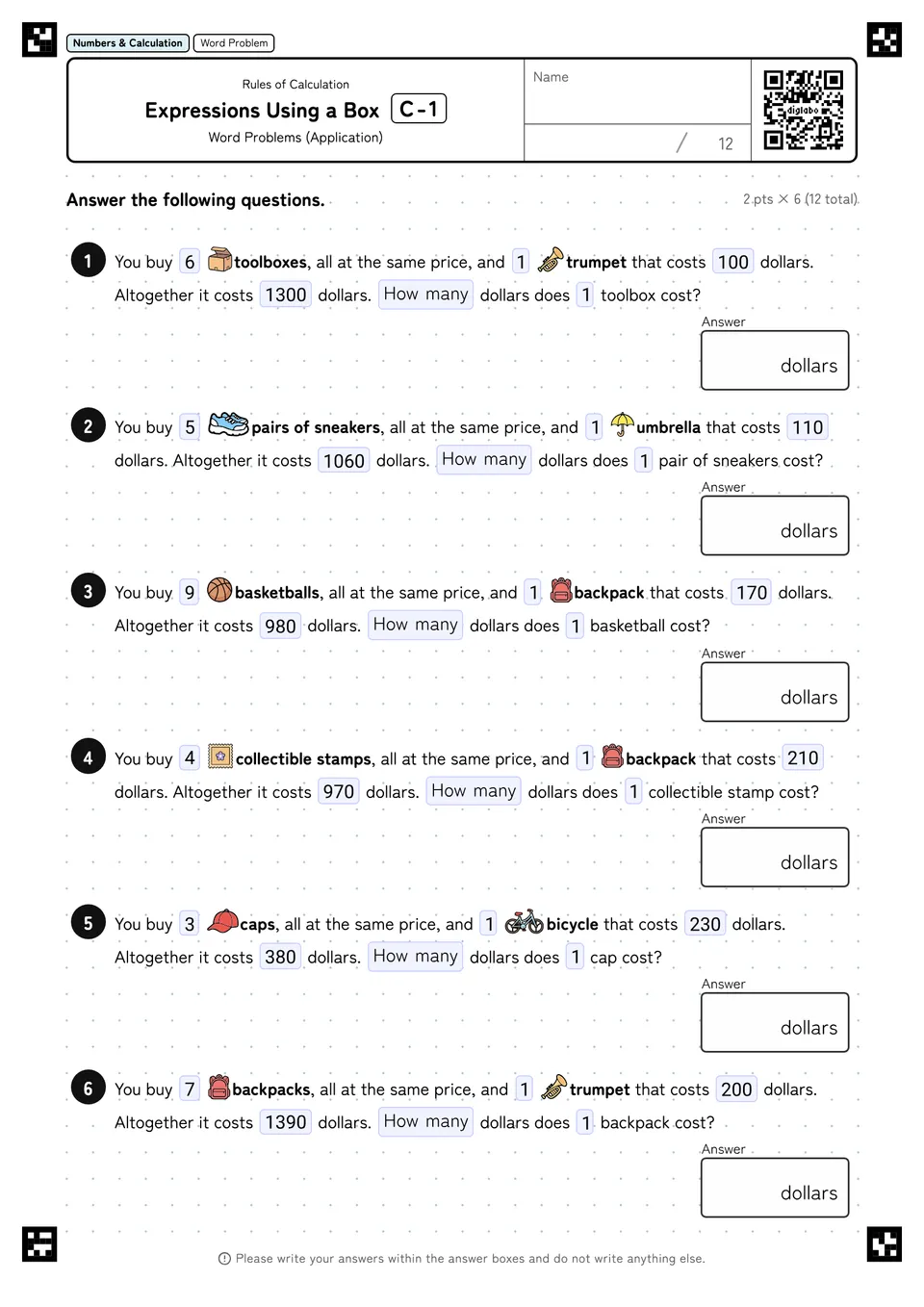 Expressions Using a BoxExpressions Using a Box Word Problems (Application)