Math Drills
Common Multiples and Least Common Multiple
C-1Word Problems (Using the LCM)

You can hand this out in class or share it on social media for free. Usage rules
What this worksheet covers
- Worksheet
- Common Multiples and Least Common Multiple
What gets hunted turns from divisors to multiples. Questions writing out the first three multiples the two numbers share, and questions naming the smallest of them, stand together as Calculation, and Word Problems asking when stacked thicknesses or cycles first agree are included.
Read more
Papers appear that write the two numbers simply multiplied together, taking it for the smallest common multiple. Divide the figure found by each of the two numbers and look at the two quotients that come out. If both can be divided by the same number, a smaller common multiple is still waiting.
In the next unit, Properties of Fractions, the greatest common divisor and the least common multiple found so far go straight to work as the tools for simplifying and for finding common denominators. Writing numbers out and pulling the shared ones from them was preparation for that.
- Using the Least Common Multiple5 questions
Questions & answers
Problems and answers on this worksheet
These are the problems in “Properties of Integers (Divisors and Multiples)”, shown with their answers.
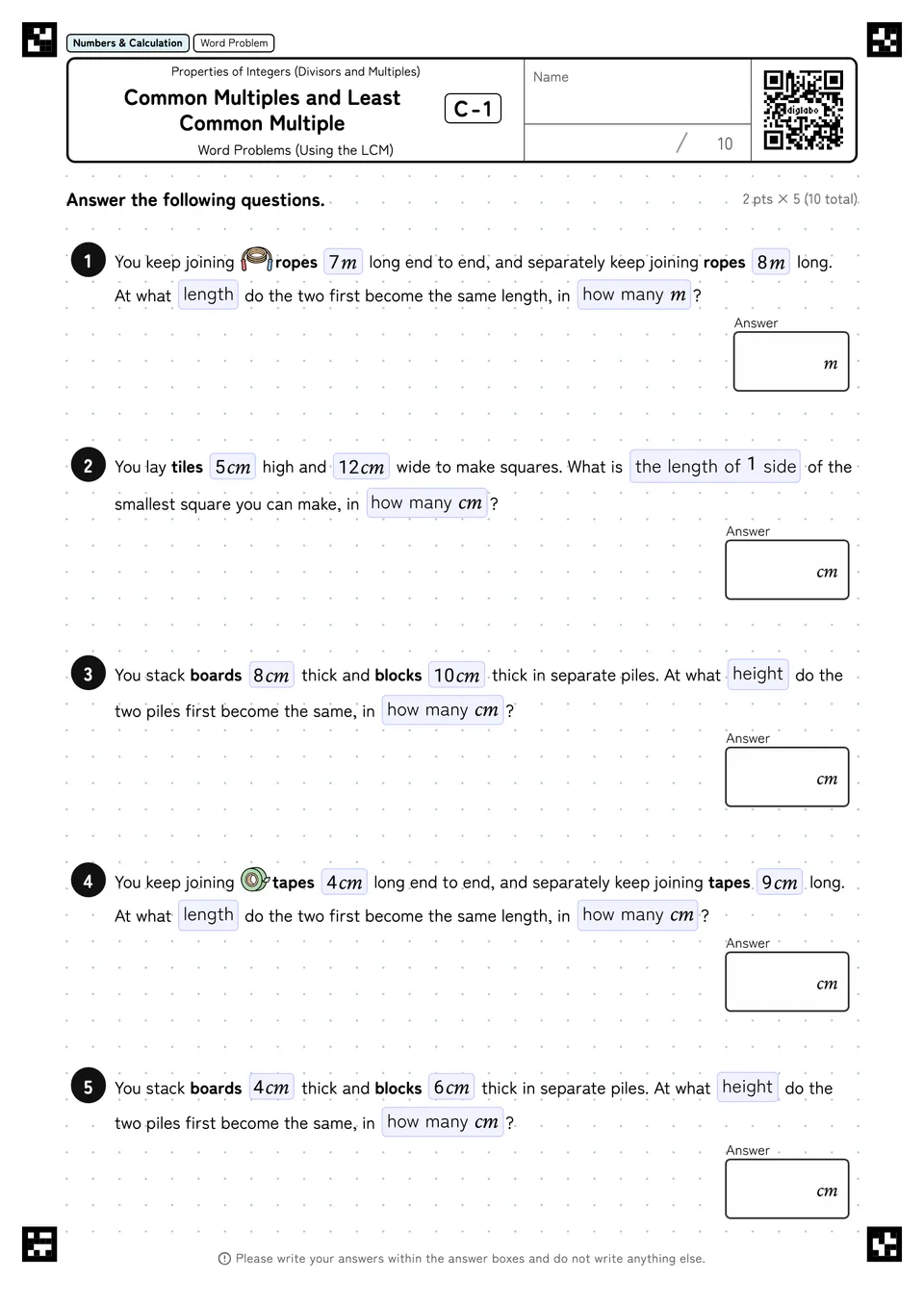
(1)You keep joining ropes 7m long end to end, and separately keep joining ropes 8m long. At what length do the two first become the same length, in how many m? Answer □
Answer: 56m
(2)You lay tiles 5cm high and 12cm wide to make squares. What is the length of 1 side of the smallest square you can make, in how many cm? Answer □
Answer: 60cm
(3)You stack boards 8cm thick and blocks 10cm thick in separate piles. At what height do the two piles first become the same, in how many cm? Answer □
Answer: 40cm
(4)You keep joining tapes 4cm long end to end, and separately keep joining tapes 9cm long. At what length do the two first become the same length, in how many cm? Answer □
Answer: 36cm
(5)You stack boards 4cm thick and blocks 6cm thick in separate piles. At what height do the two piles first become the same, in how many cm? Answer □
Answer: 12cm
What to do next
More worksheets in this unit
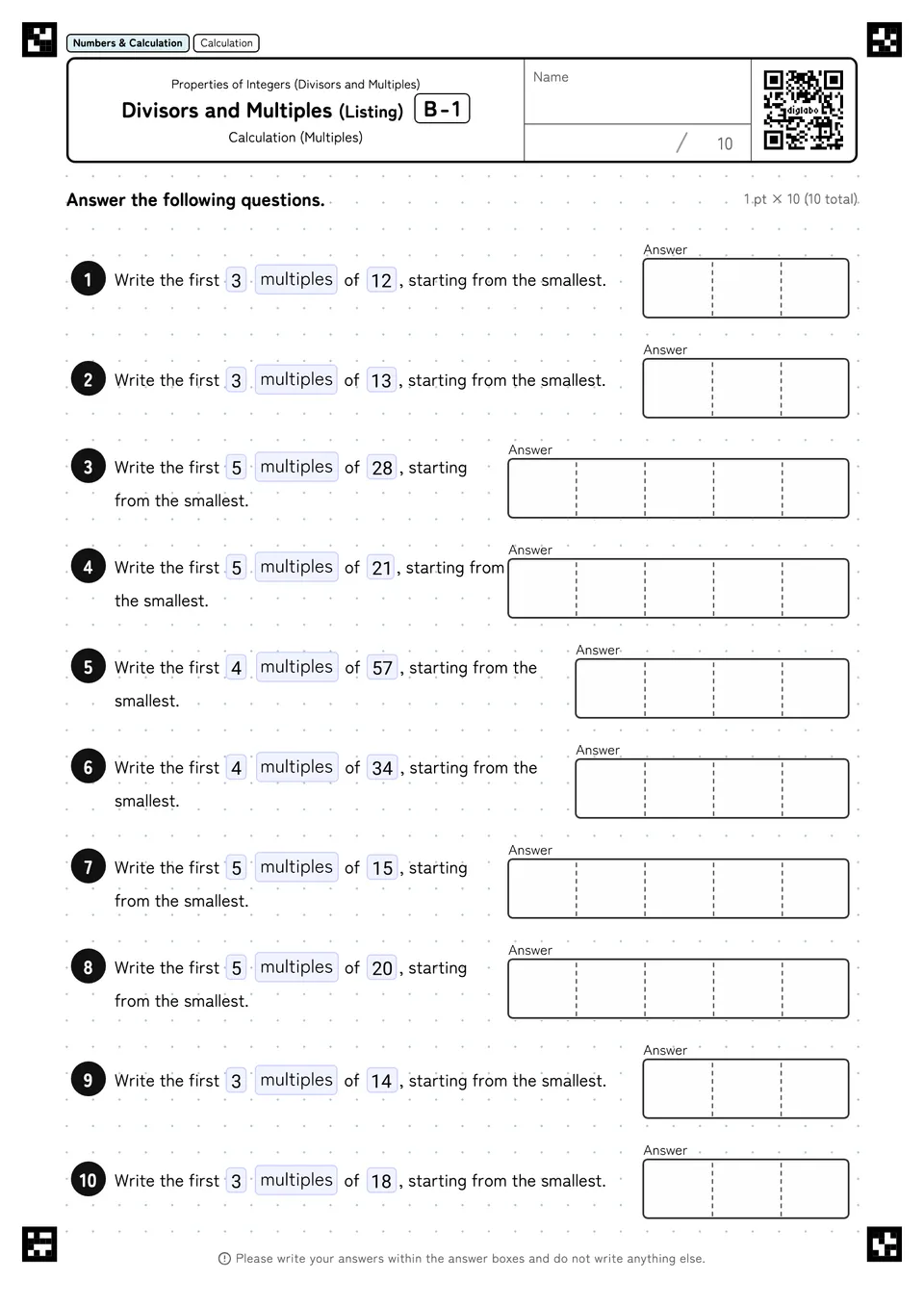 Divisors and Multiples (Listing)Divisors and Multiples (Listing) Calculation (Multiples)
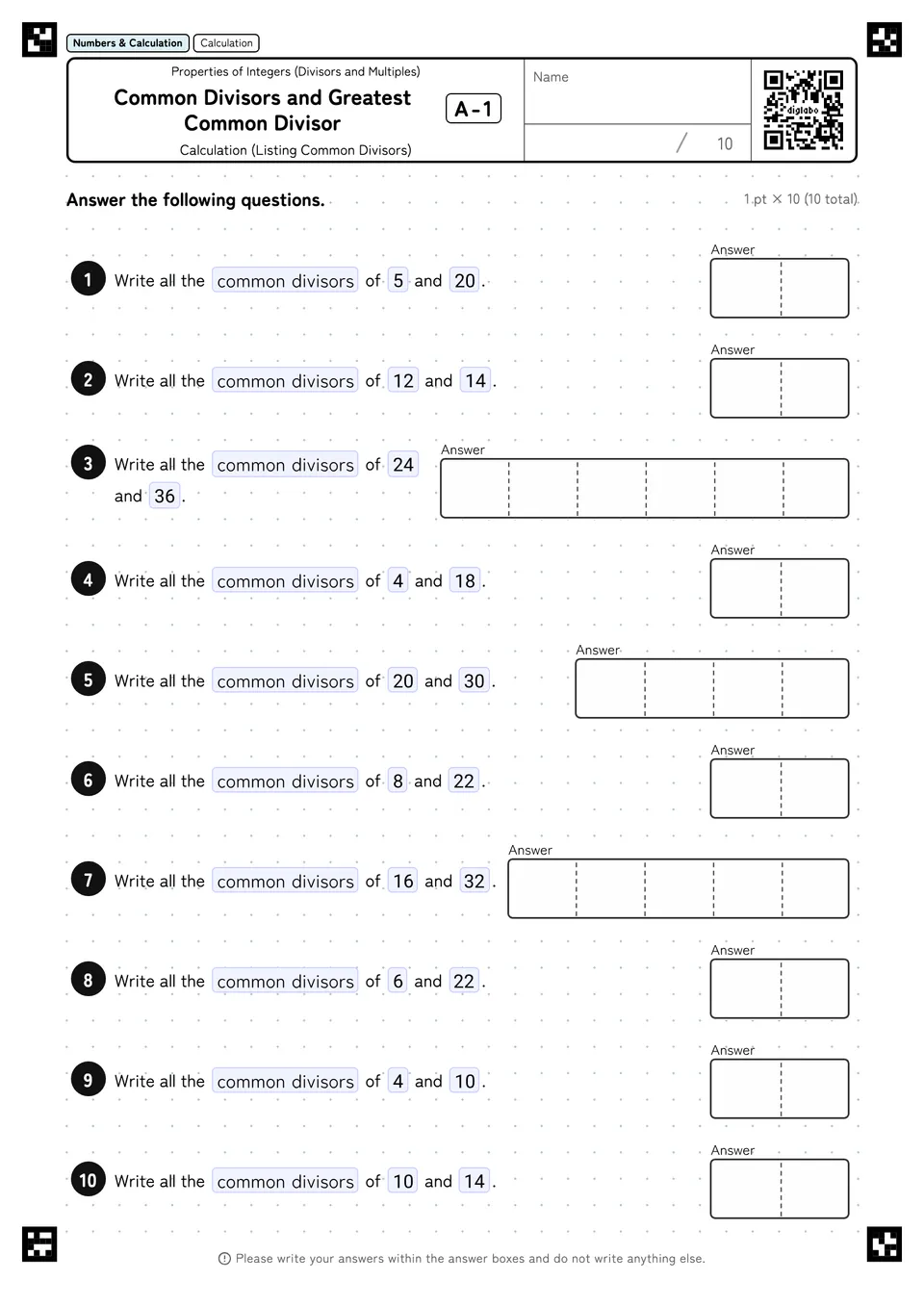 Common Divisors and Greatest Common DivisorCommon Divisors and Greatest Common Divisor Calculation (Listing Common Divisors)
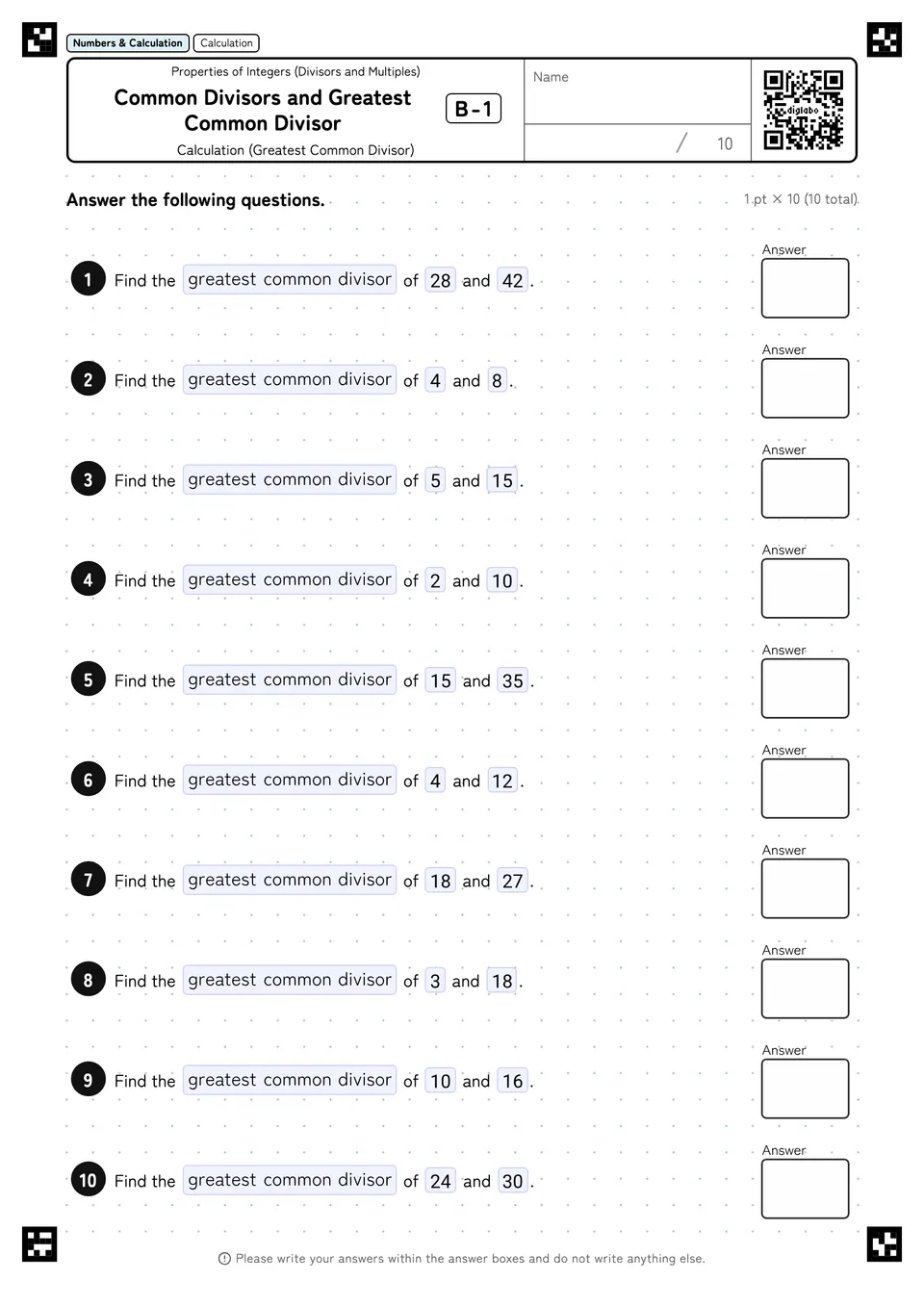 Common Divisors and Greatest Common DivisorCommon Divisors and Greatest Common Divisor Calculation (Greatest Common Divisor)
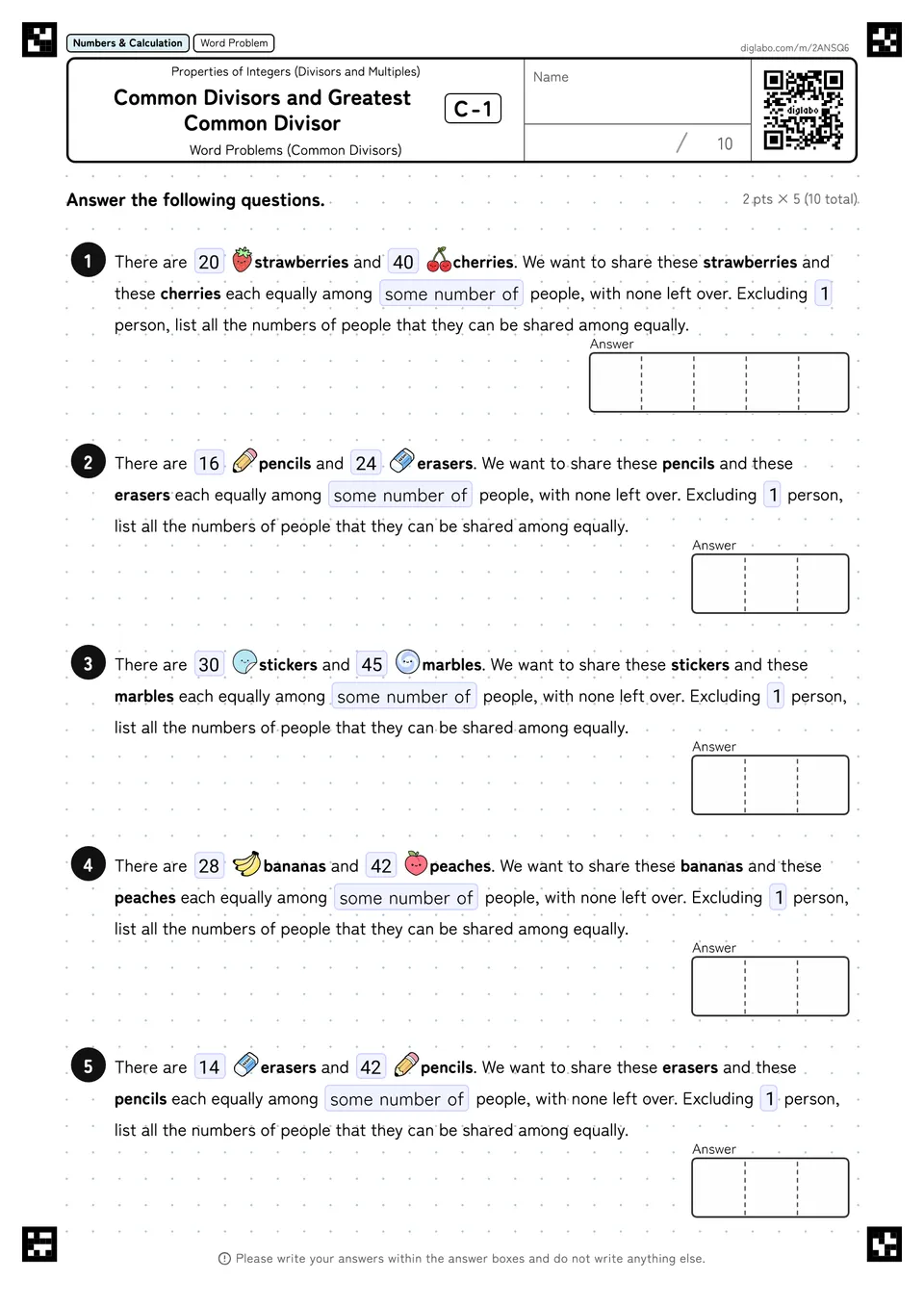 Common Divisors and Greatest Common DivisorCommon Divisors and Greatest Common Divisor Word Problems (Common Divisors)
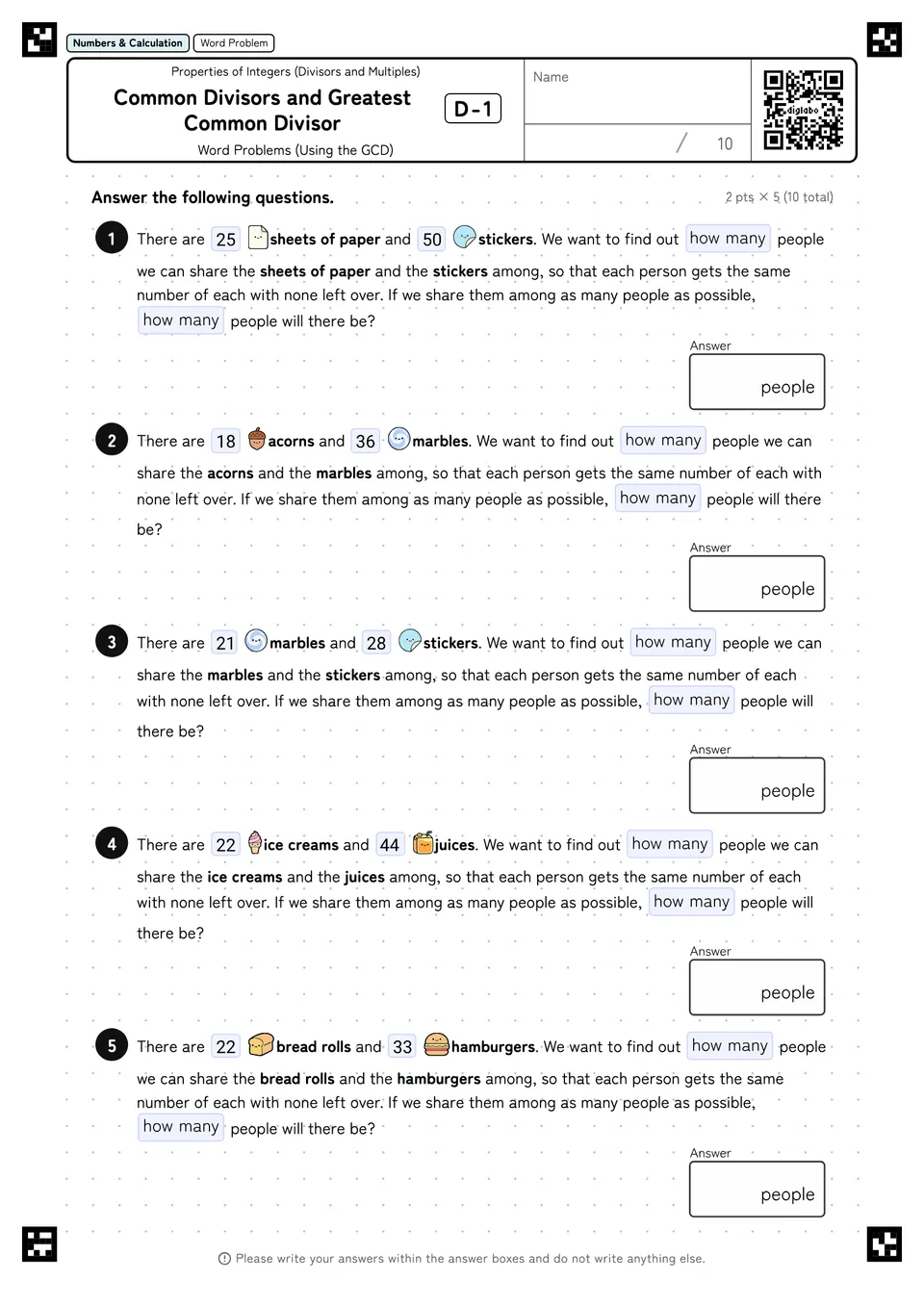 Common Divisors and Greatest Common DivisorCommon Divisors and Greatest Common Divisor Word Problems (Using the GCD)
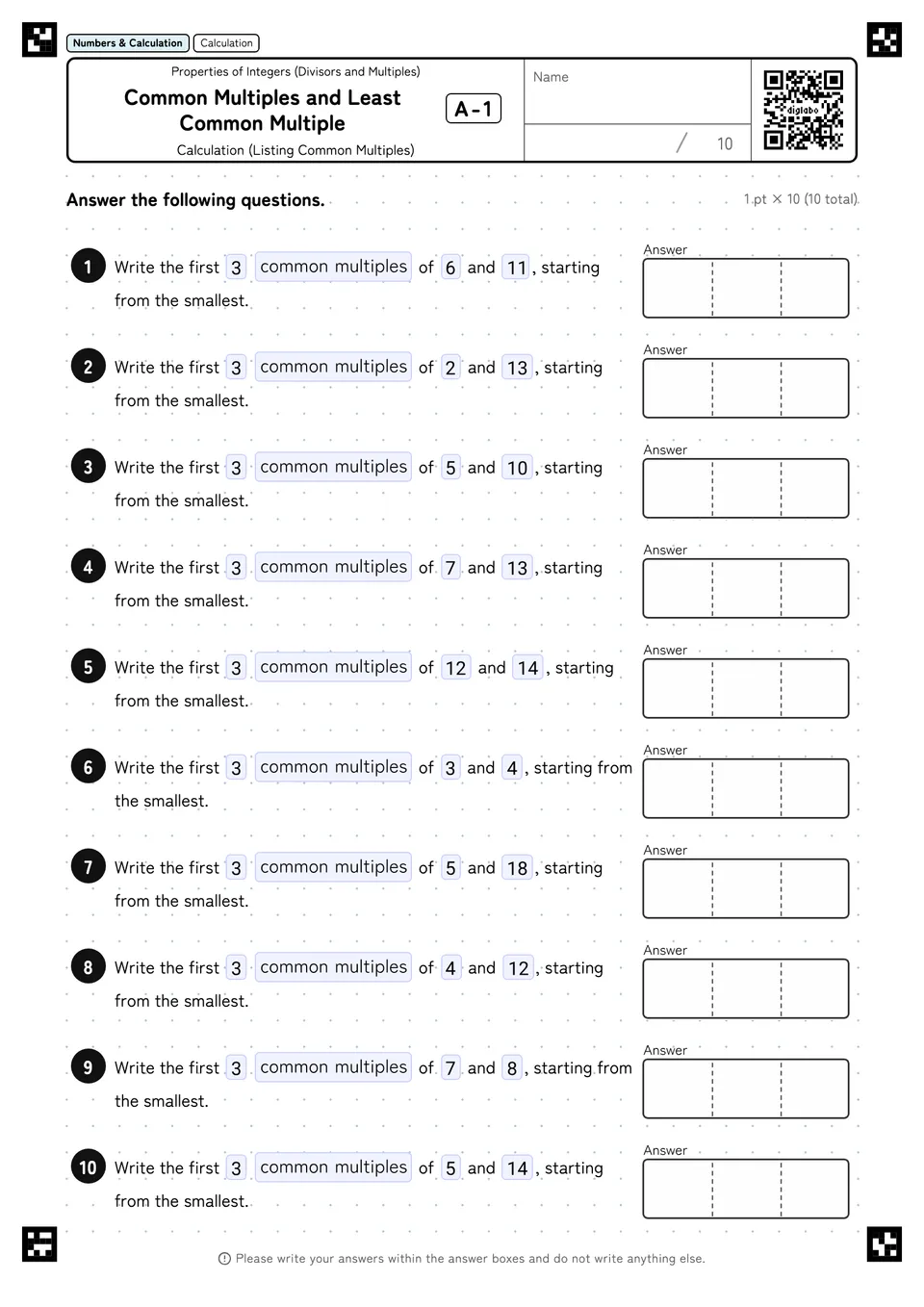 Common Multiples and Least Common MultipleCommon Multiples and Least Common Multiple Calculation (Listing Common Multiples)
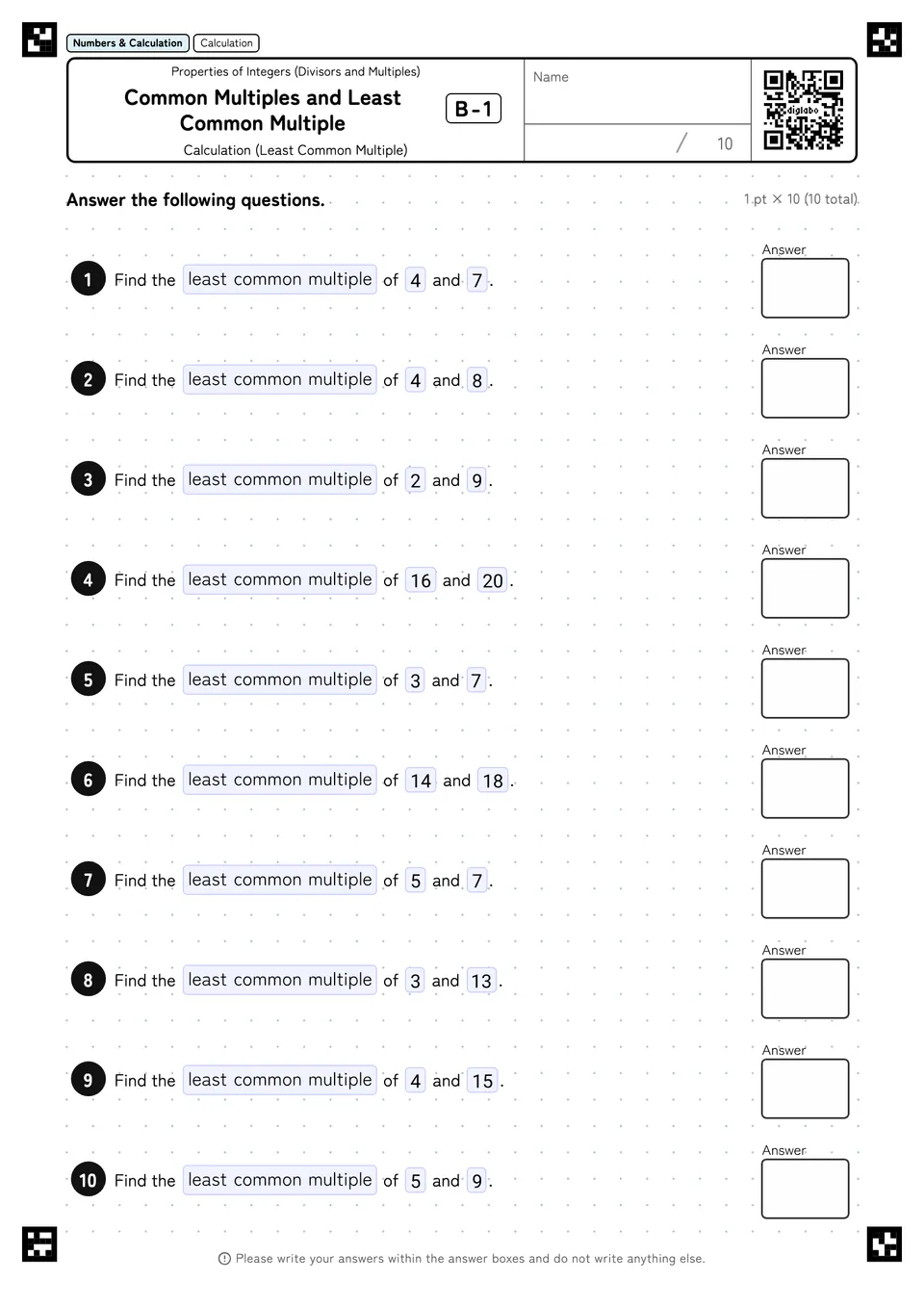 Common Multiples and Least Common MultipleCommon Multiples and Least Common Multiple Calculation (Least Common Multiple)
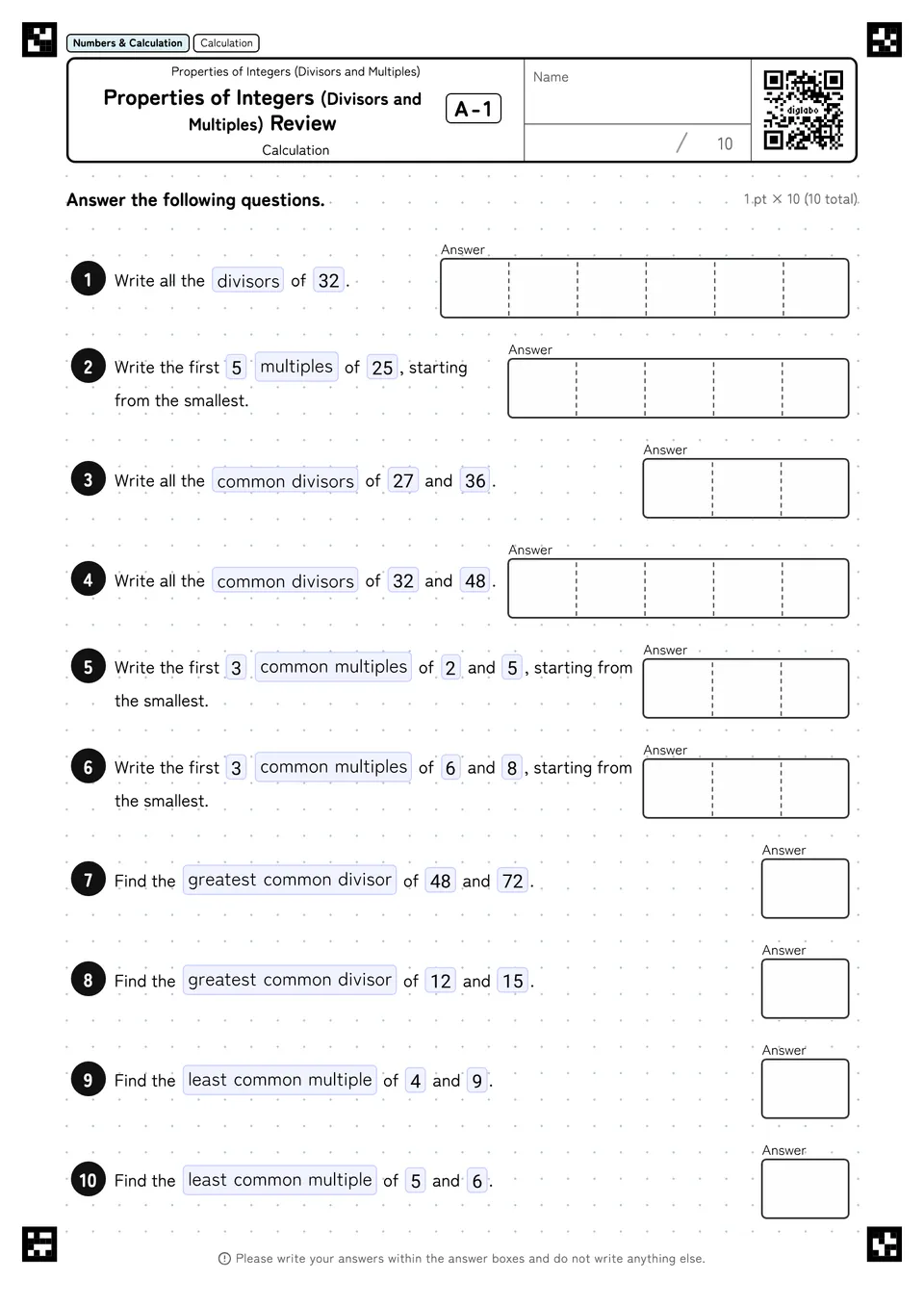 Properties of Integers (Divisors and Multiples) ReviewProperties of Integers (Divisors and Multiples) Review Calculation
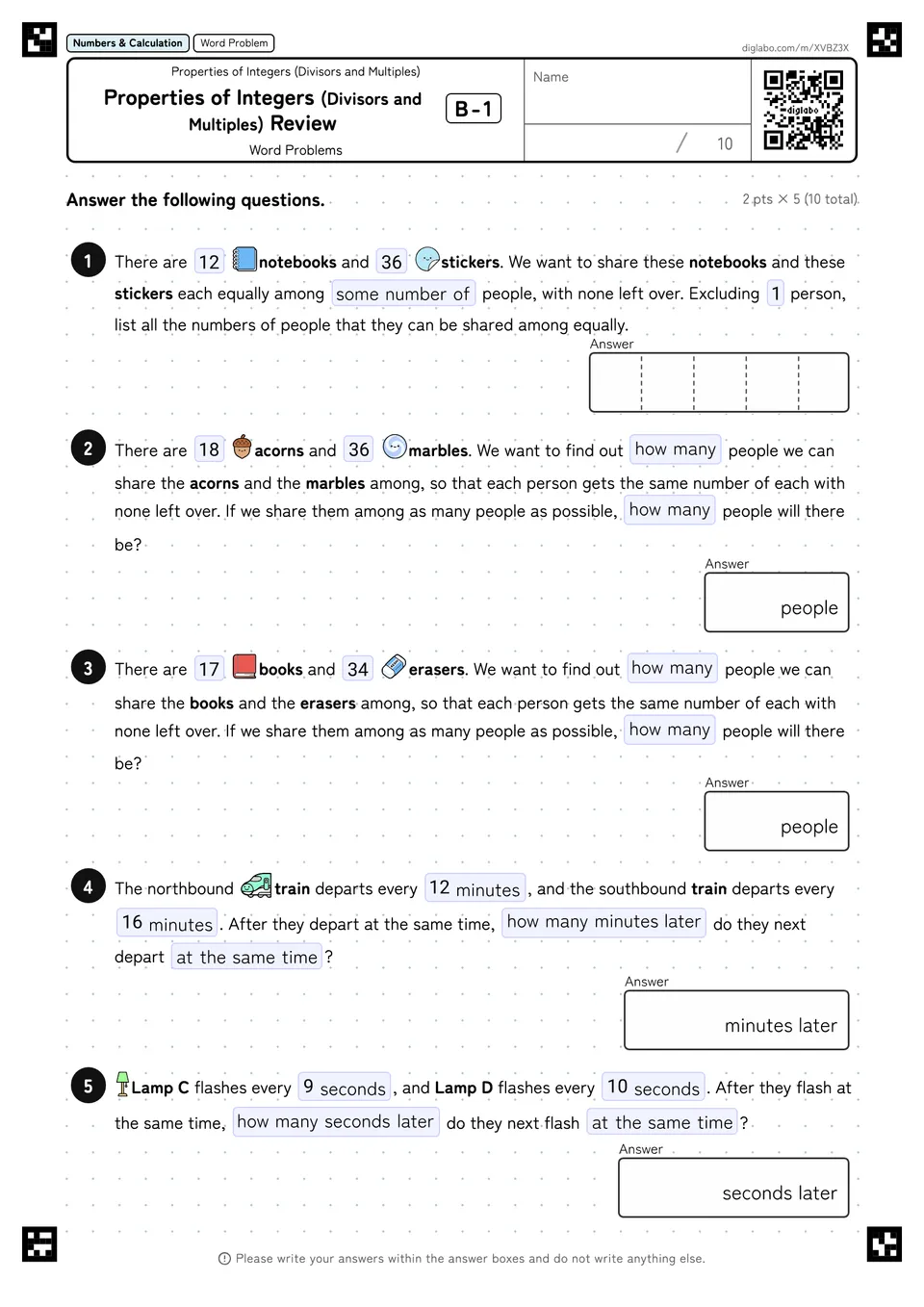 Properties of Integers (Divisors and Multiples) ReviewProperties of Integers (Divisors and Multiples) Review Word Problems