
Math Drills · Grade 5 (Elementary School)
Properties of Fractions
36 free maths worksheets for “Properties of Fractions” in Grade 5 (Elementary School). Download the question and answer PDFs and print them, no sign-up needed.
WorksheetsWhat this unit covers
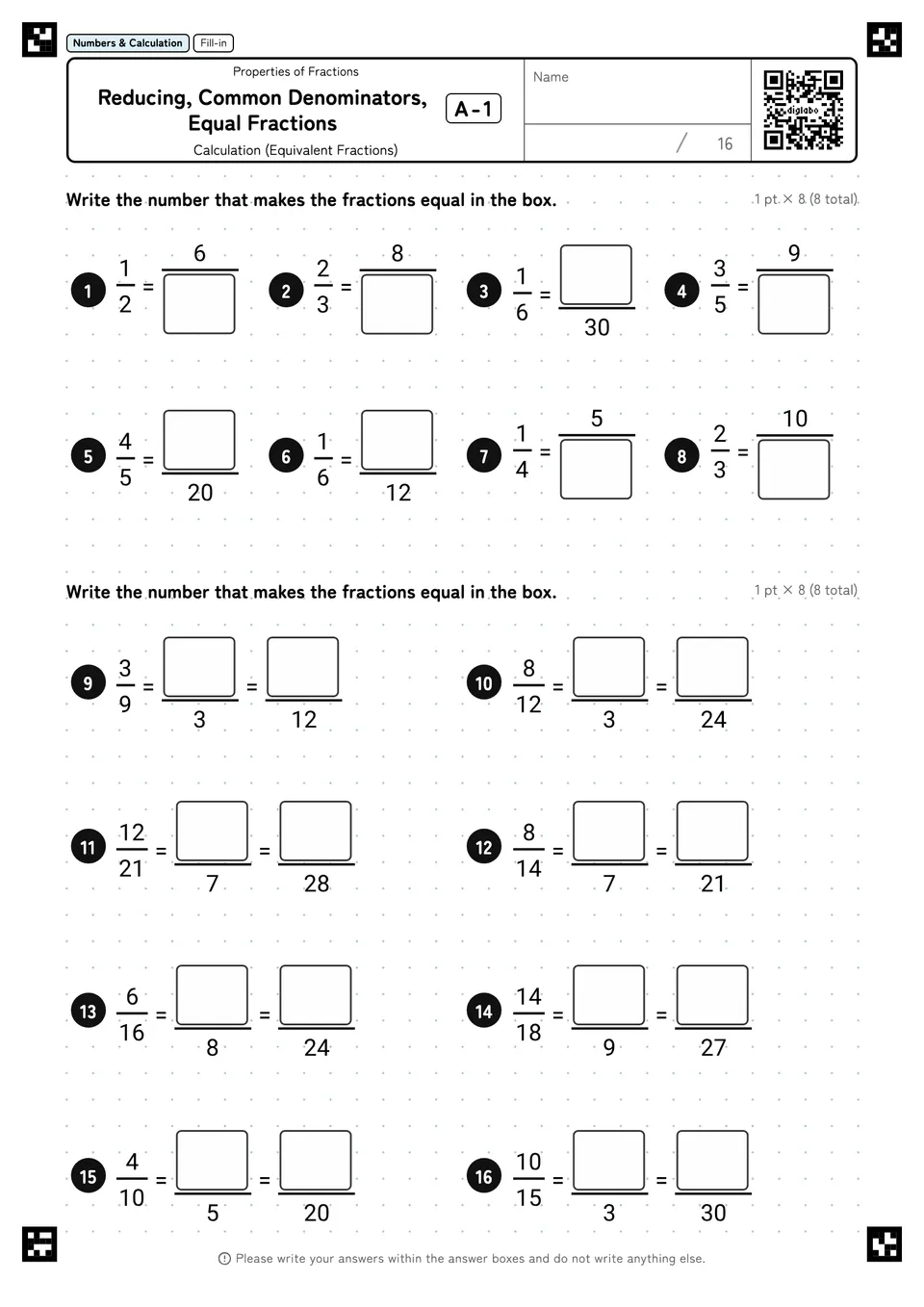
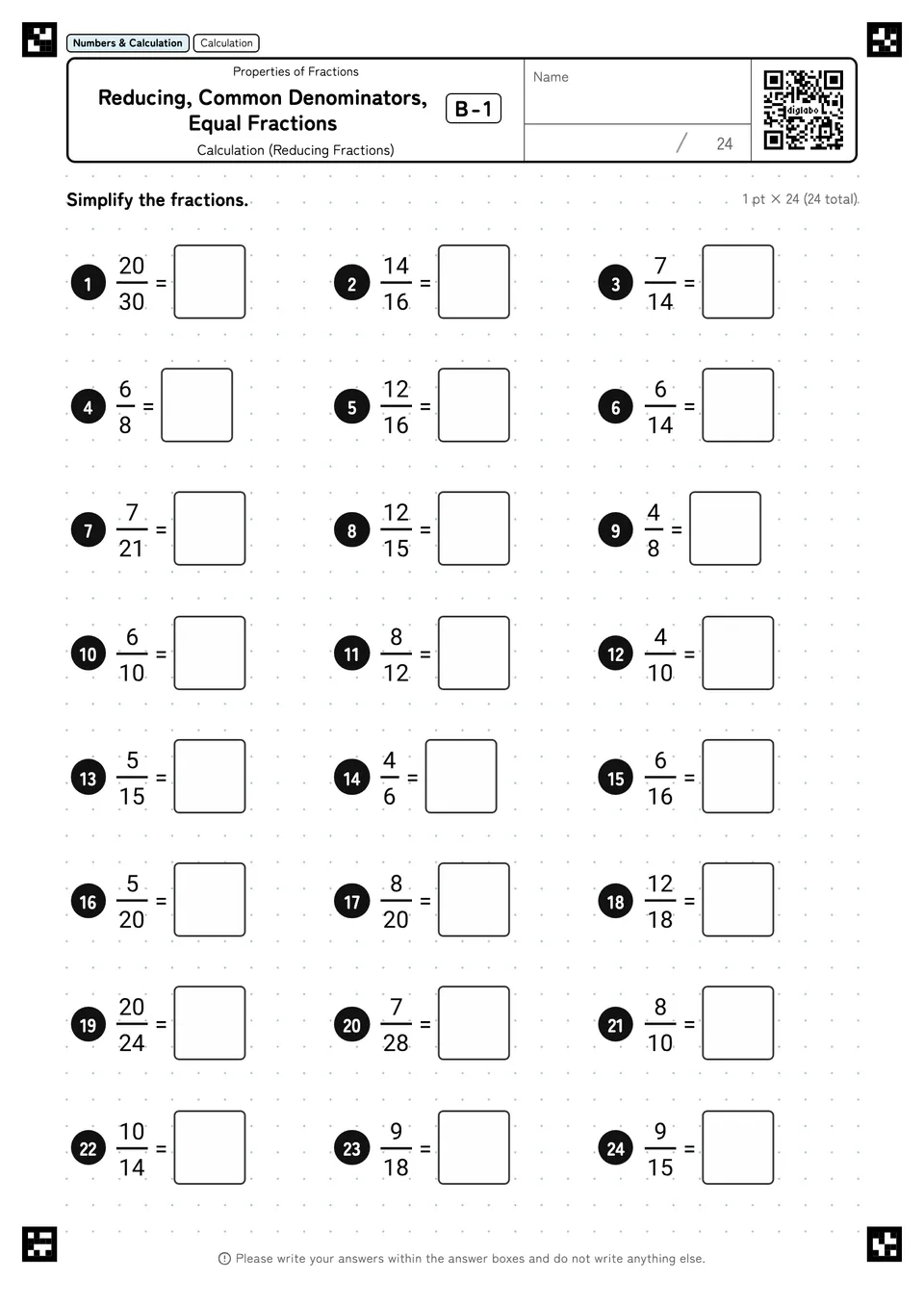
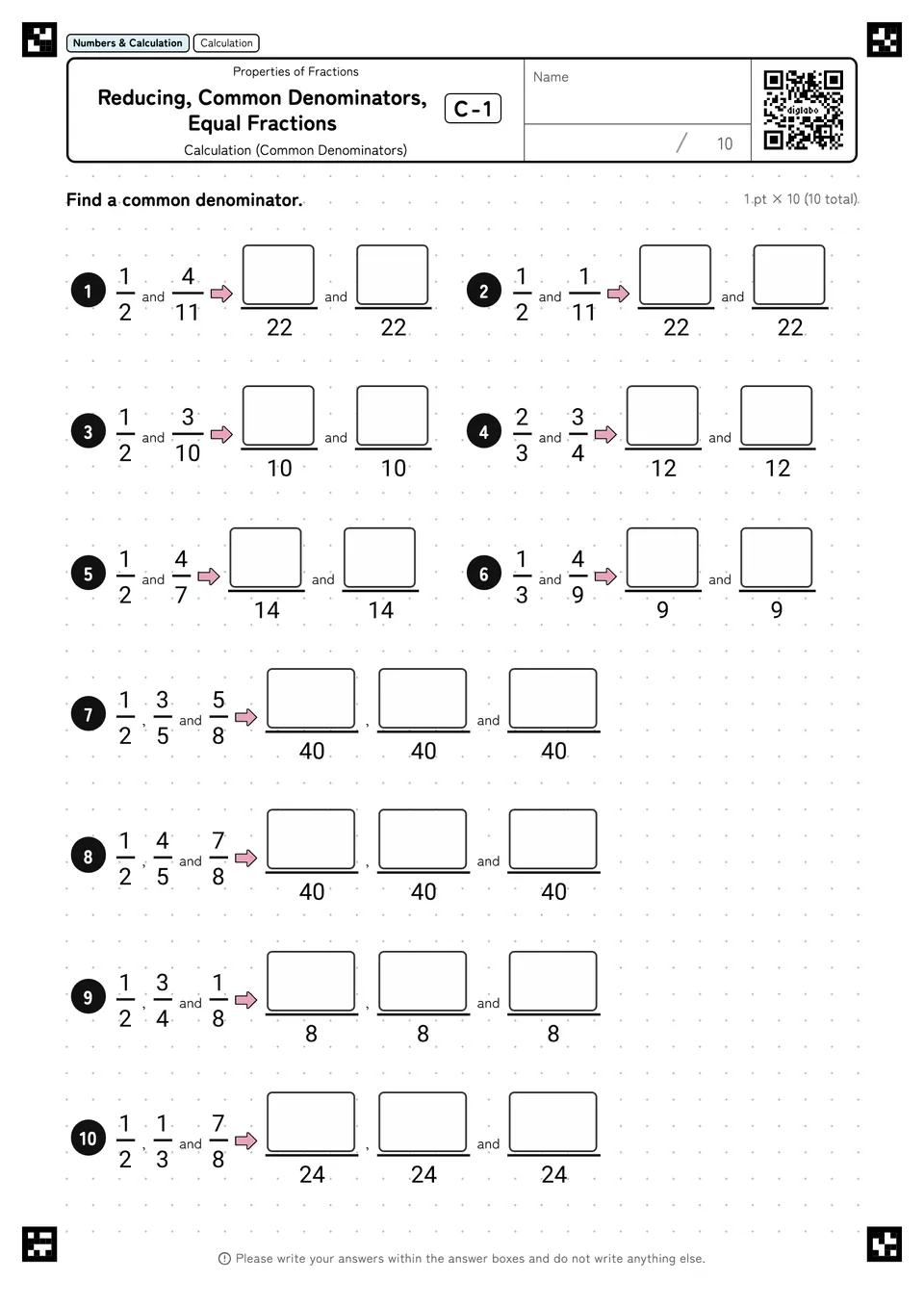
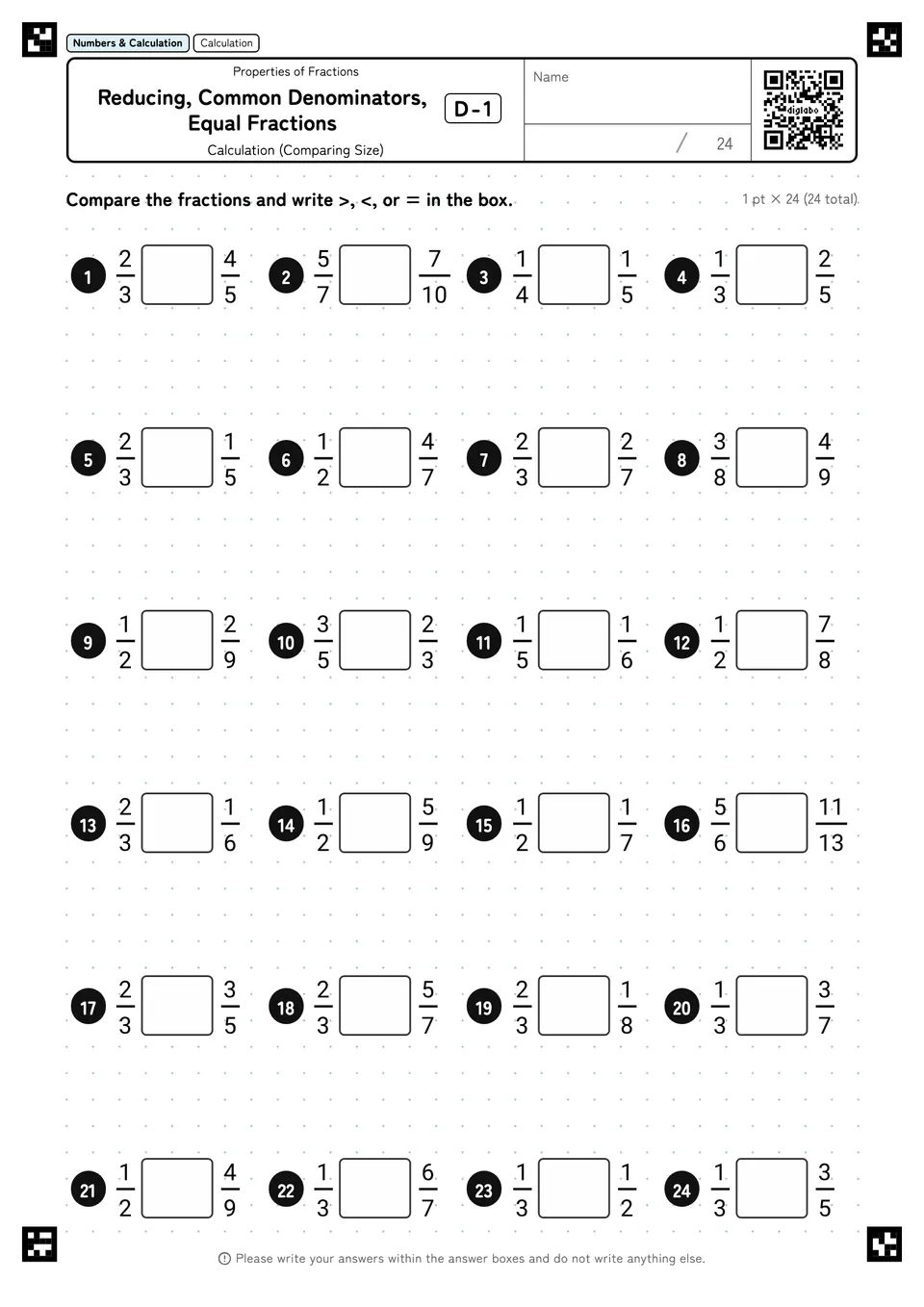
Everything turns on the property that multiplying or dividing numerator and denominator by the same number leaves the value unchanged, which supports simplifying, finding common denominators for two or three fractions, and comparing sizes with inequality signs. Expressing a quotient as a fraction and moving between fractions and decimals widen the picture further.
When finding a common denominator, children match the denominators and leave the numerators untouched. When simplifying, they divide by 2 once and stop, giving a fraction that still reduces. Expressing a quotient as a fraction turns 3 ÷ 4 into 4/3, with the divisor put on top.
Rewriting a fraction by reducing it or by finding a common denominator uses the greatest common divisor and least common multiple from Properties of Integers (Divisors and Multiples). Matching denominators this way is put to use right away in the next unit, Adding Fractions (Unlike Denominators).
Learning steps
- Reducing, Common Denominators, Equal FractionsEquivalent Fractions (Fill in the Blank)Equivalent Fractions (Two Blanks)Simplifying FractionsCommon Denominators (Two Fractions)Common Denominators (Three Fractions)Comparing Size (Inequality Signs)
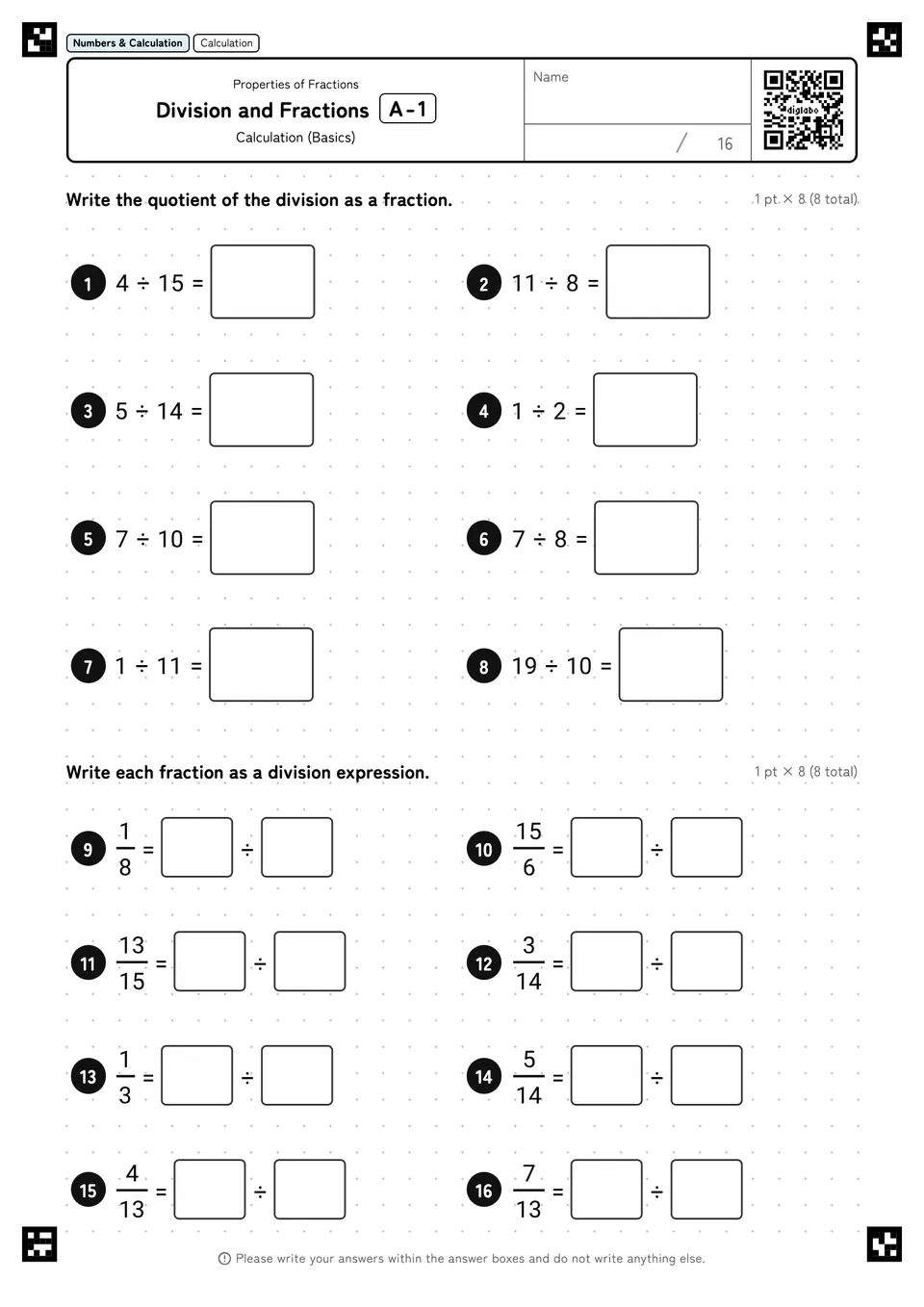
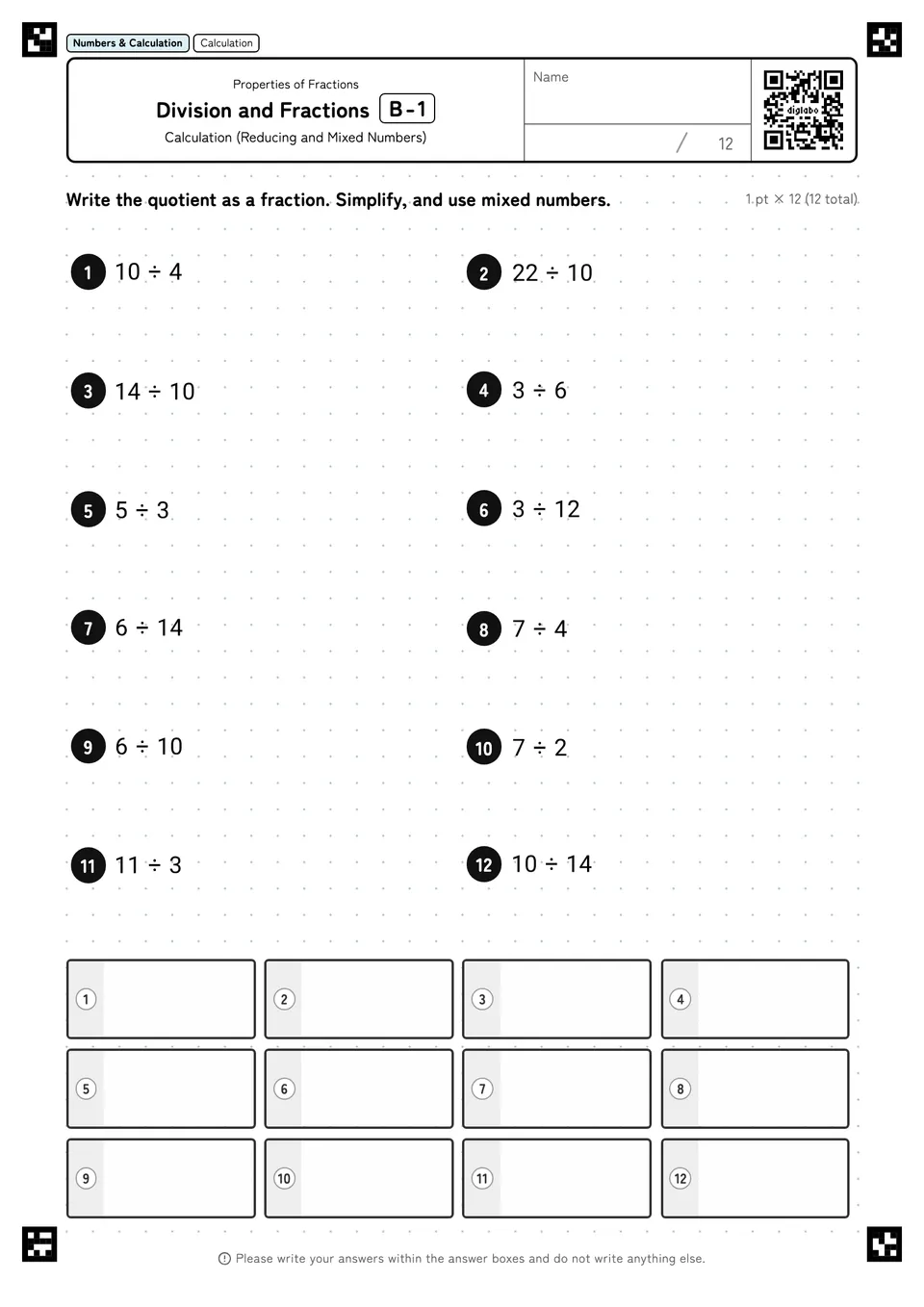
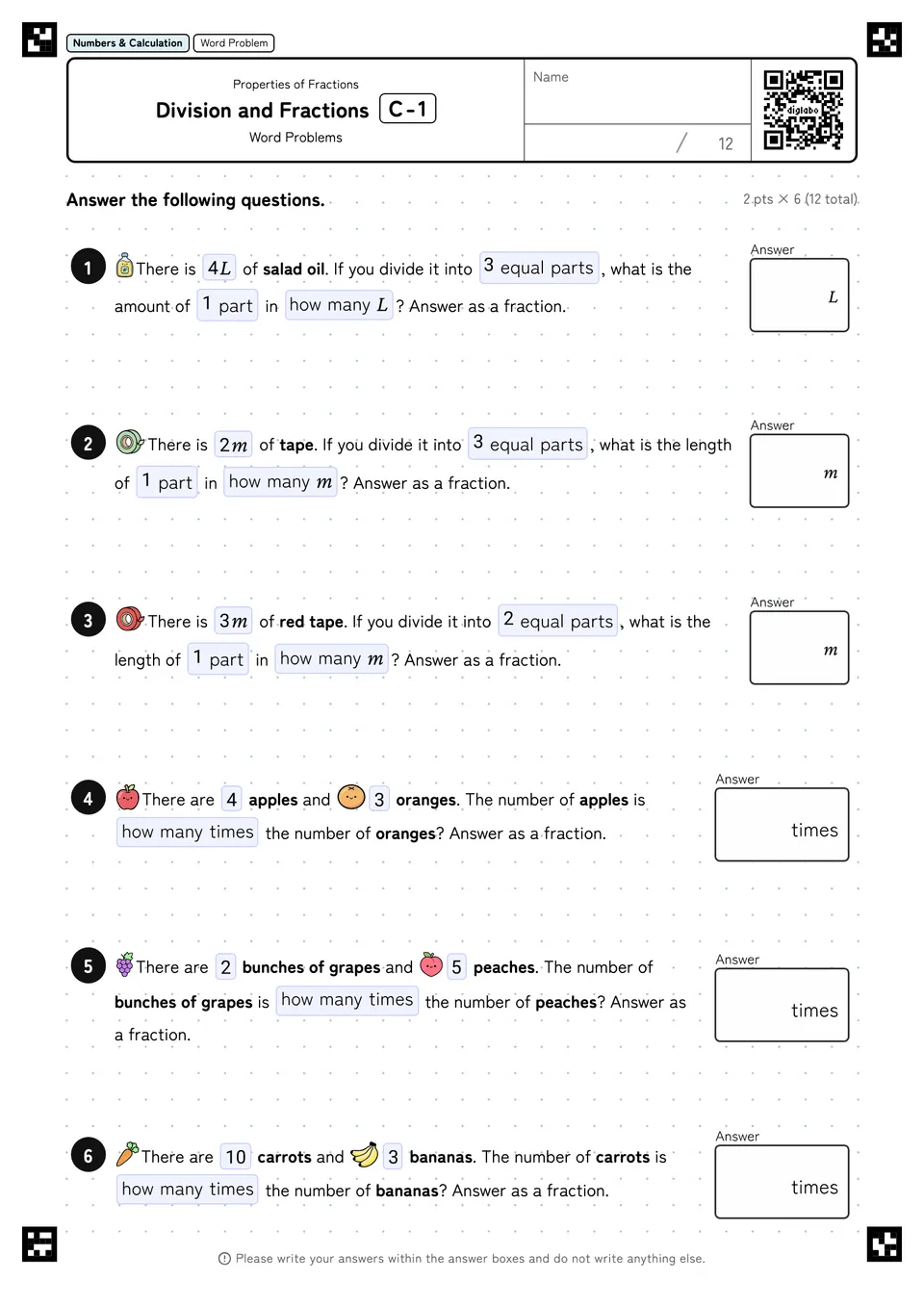
- Division and FractionsExpressing a Quotient as a FractionFraction→Division (Reverse)Simplifying and Converting to Mixed NumbersPartitive Division (Word Problems)How Many Times as Many (Word Problems)
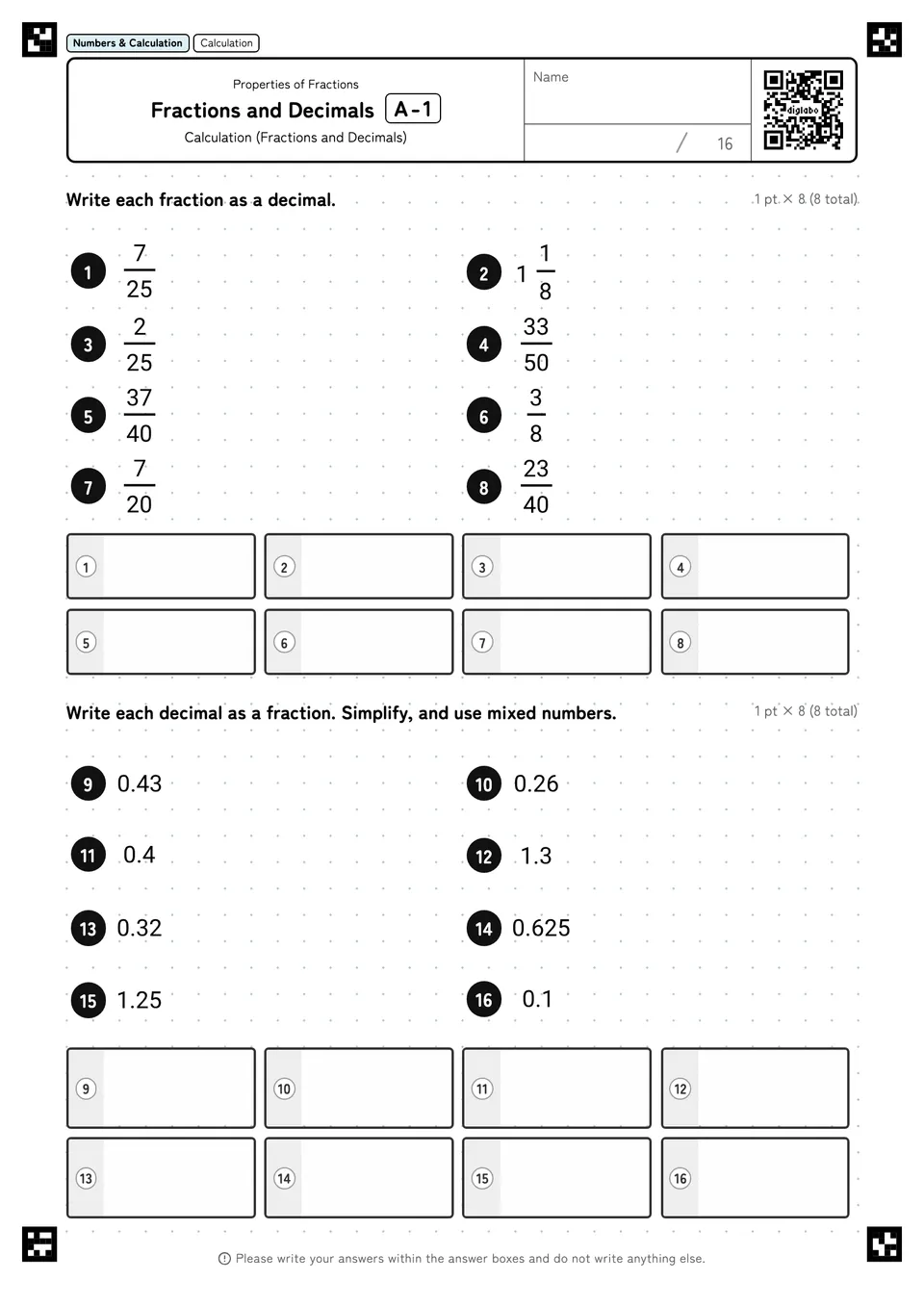
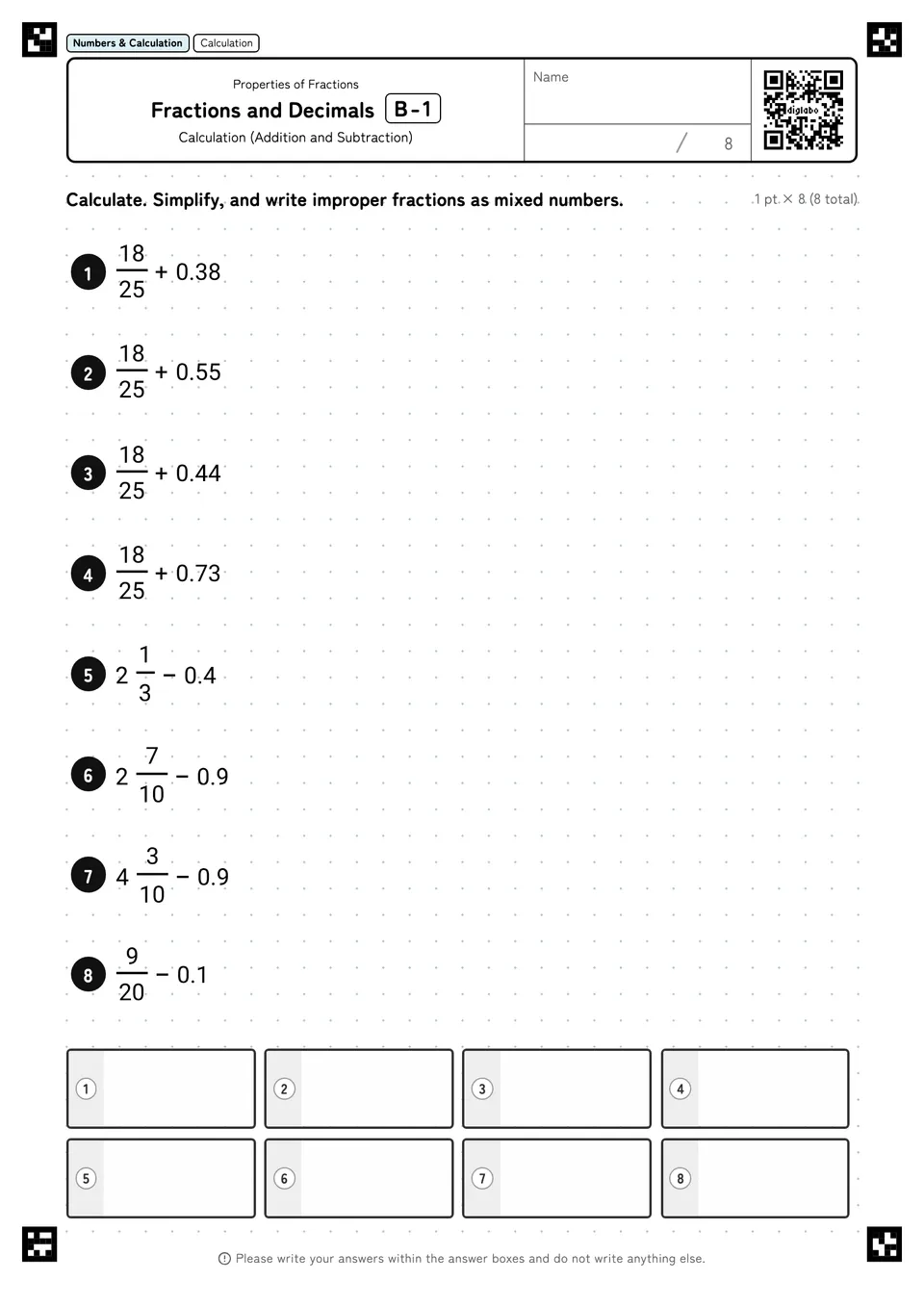
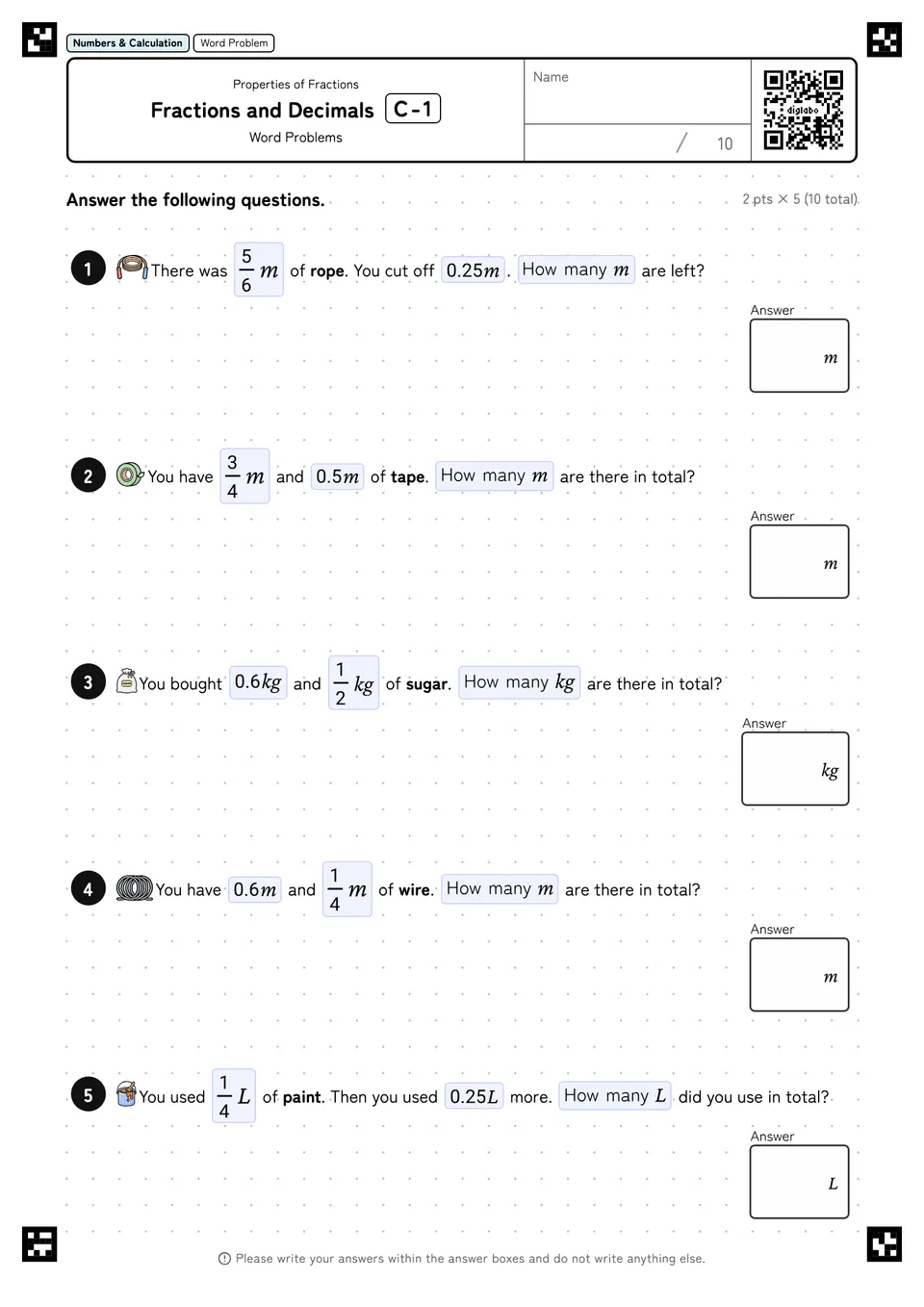
- Fractions and DecimalsDecimal→FractionFraction→Decimal
Worksheets
Related study guides
- Teaching Multiples and Divisors — Why 1 and 12 Go Missing From "The Divisors of 12"
Ask your child to list the divisors of 12, and they stop at 2, 3, 4, 6 — 1 and 12 never show up. The cause isn't calculation skill. It's that your child hasn't settled on how far to search for divisors. Here's how to teach them to see it as a set.
- Common Denominators and Reducing Fractions — When "Same Size, Different Shape" Doesn't Land
Trouble with fractions isn't one thing. There's the grade 3 struggle to grasp what a fraction even is, and there's the grade 5 struggle with the mechanics of finding a common denominator. Rewriting the denominator and leaving the numerator behind belongs to the second kind. Here's how to show why the size doesn't change.
- Why Fractions Confuse Children at the Start — "Cut in Two" Isn't the Same as "One Half"
Fraction trouble starts in grade 3, not grade 5. The missing word "equally", the shifting "half of what", the reversed sense of size — and how to build the base that carries through to common denominators.
Frequently asked questions
- What do the “Properties of Fractions” worksheets for Grade 5 (Elementary School) practice?
- They cover problems such as Equivalent Fractions (Fill in the Blank), Equivalent Fractions (Two Blanks), Simplifying Fractions, Common Denominators (Two Fractions), Common Denominators (Three Fractions), Comparing Size (Inequality Signs), Expressing a Quotient as a Fraction, Fraction→Division (Reverse).
- How many “Properties of Fractions” worksheets are there for Grade 5 (Elementary School)?
- 36 worksheets are free to use. Every one is a printable PDF and comes with an answer key.