
Math Drills · Grade 1 (Elementary School)
Comparing Length
3 free maths worksheets for “Comparing Length” in Grade 1 (Elementary School). Download the question and answer PDFs and print them, no sign-up needed.
WorksheetsWhat this unit covers
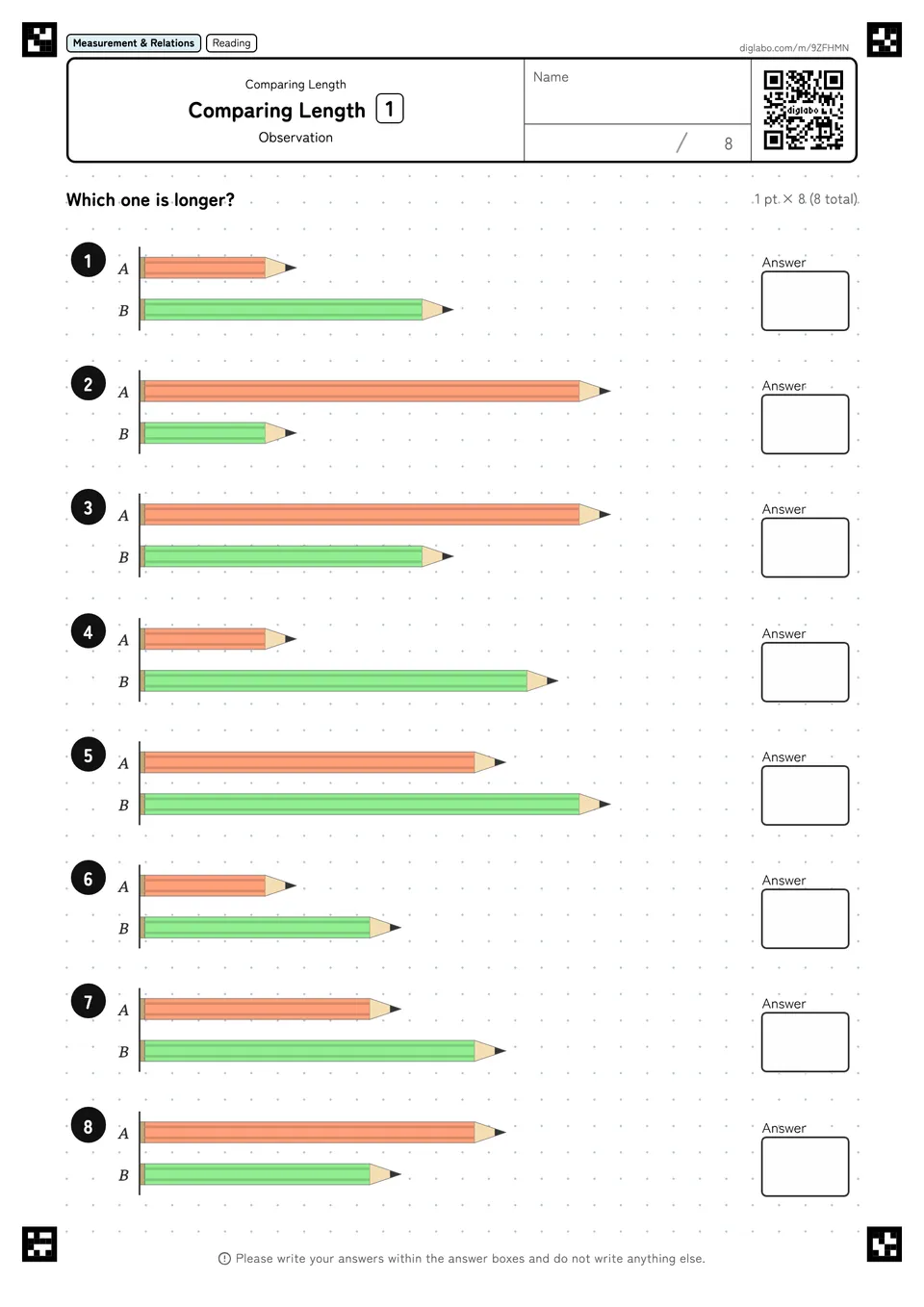
Two objects are set against each other in Comparing Directly. From pictures of pencils and ribbons laid side by side, children read off which is longer once the ends are lined up, and come to see length as the amount from one end to the other rather than where an object happens to sit.
The classic error is calling the object that sticks out on the right the longer one, even when the left ends are not aligned. The left end is being ignored. A string laid down in a curve is often judged short because it looks compact, which means the child is not picturing it straightened out.
From here the subject moves away from numbers and toward comparing the size of objects. Judging purely by appearance and by handling the objects directly is a step ahead of measuring with a marked scale, which arrives with Length (cm, mm, m) in grade 2.
Learning steps
Worksheets
Related study guides
- Learning Units of Length and Capacity — Build a Feel for Quantity Before Conversion
They know 1 L = 10 dL but freeze on the problem. Unit trouble isn't a memory gap — it's the missing feel for what 1 dL or 1 cm actually is. Here's how to build it at home.
Frequently asked questions
- What do the “Comparing Length” worksheets for Grade 1 (Elementary School) practice?
- They cover problems such as Comparing Directly.
- How many “Comparing Length” worksheets are there for Grade 1 (Elementary School)?
- 3 worksheets are free to use. Every one is a printable PDF and comes with an answer key.