Math Drills
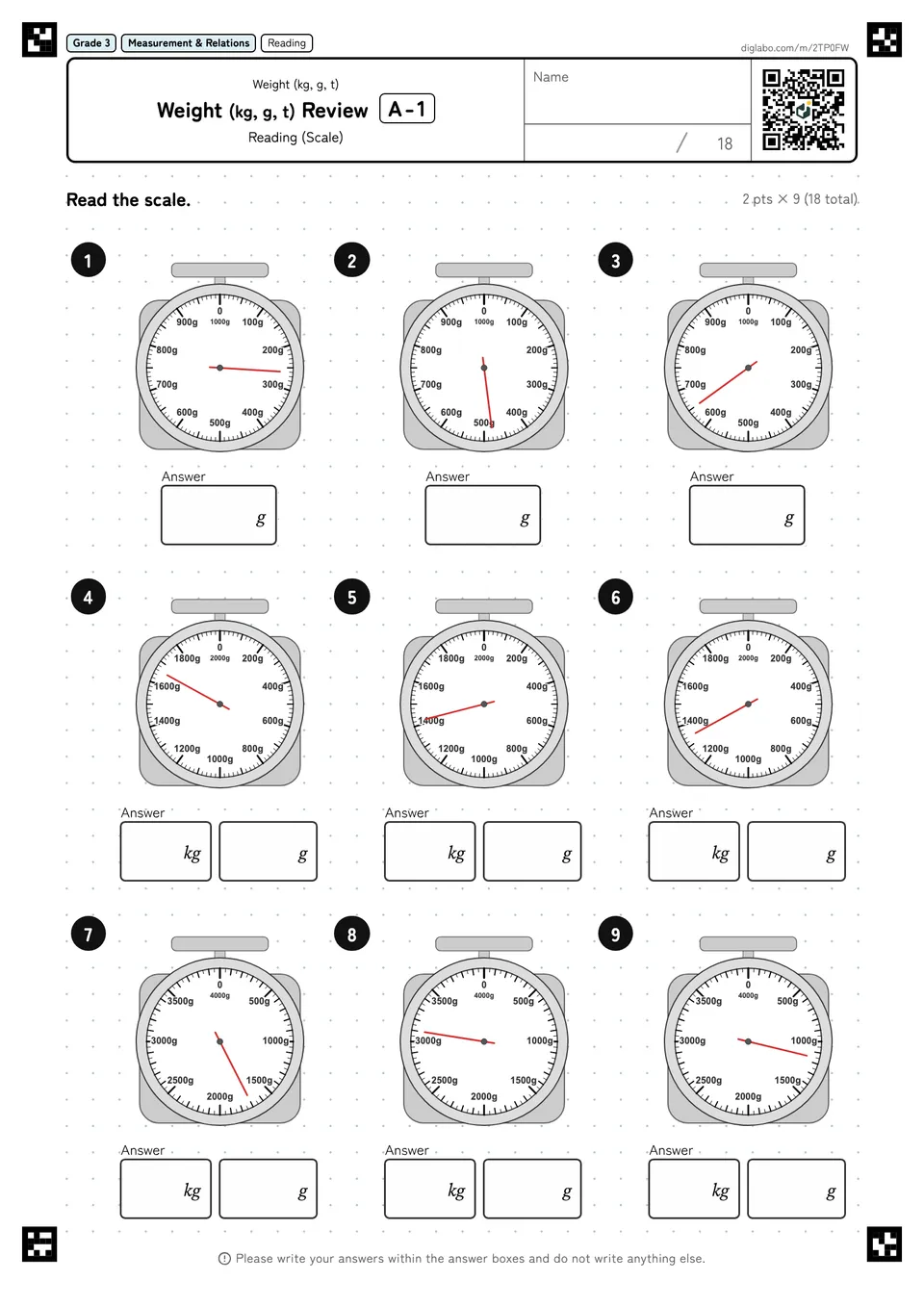
Weight (kg, g, t) Review
A-1Reading (Scale)
You can hand this out in class or share it on social media for free. Usage rules
What this worksheet covers
- Topic
- Weight (kg, g, t)
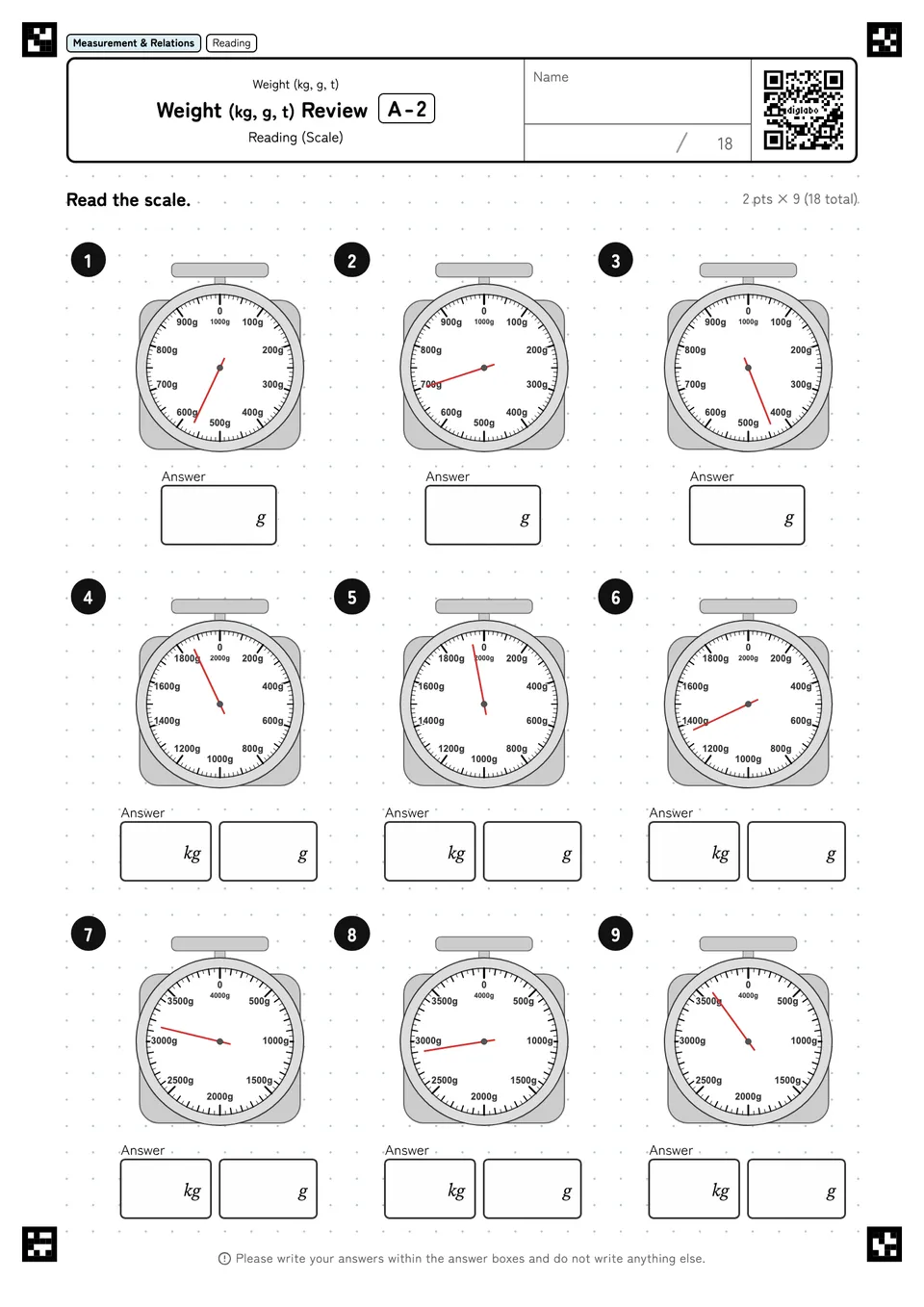
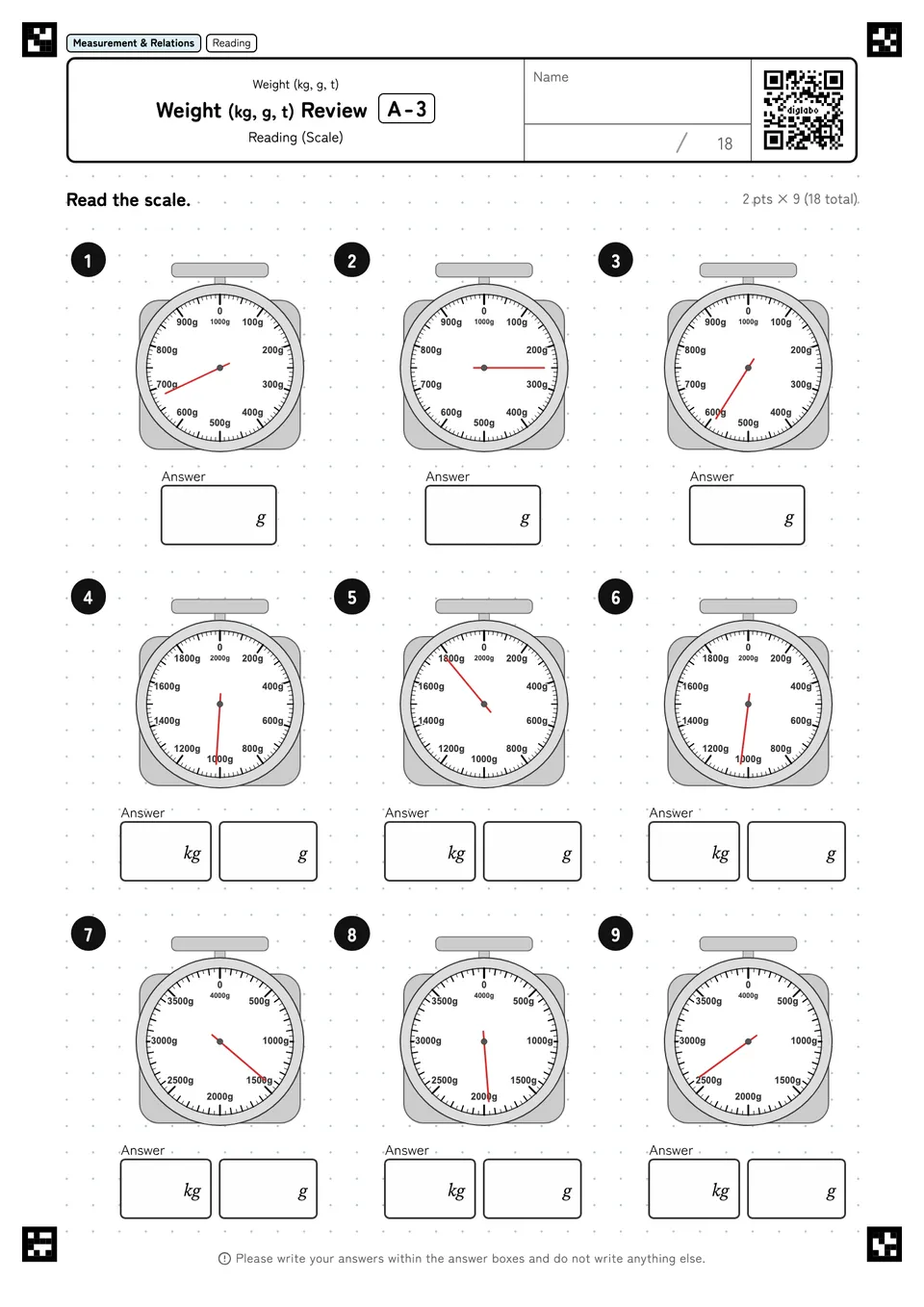
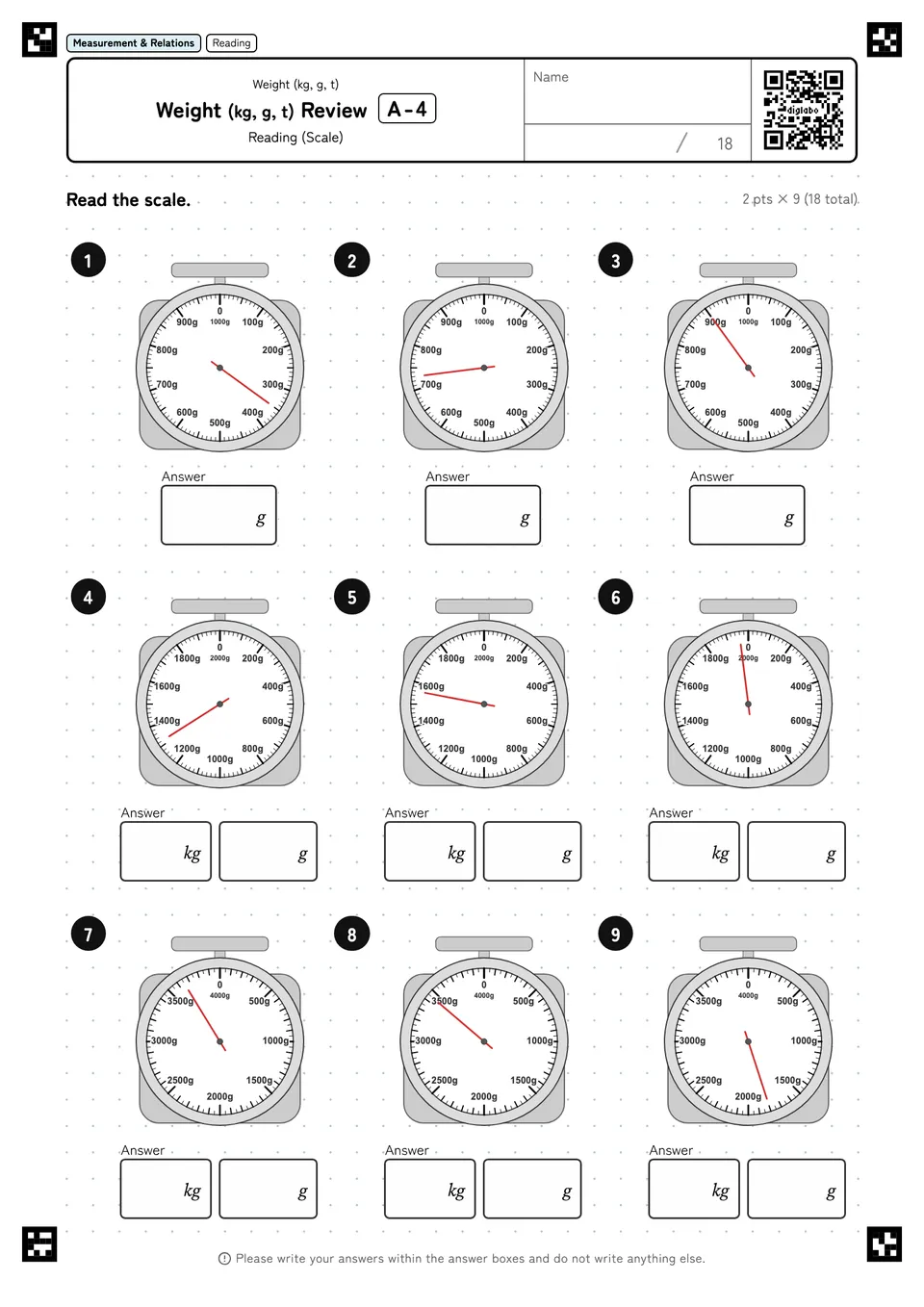
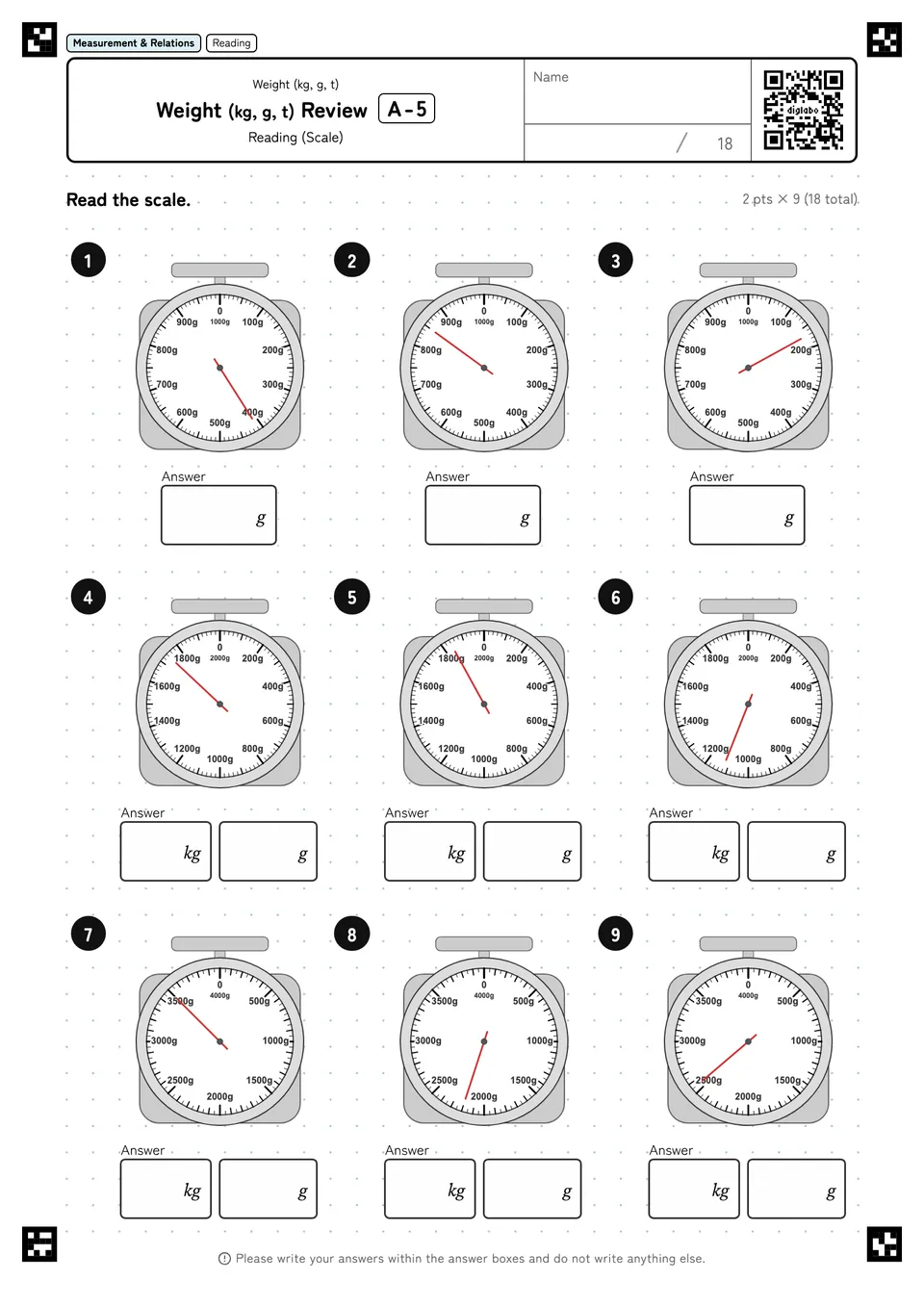
Reading a scale comes first, and children get used to dials whose smallest division differs across the 1kg, 2kg and 4kg faces. From there the unit covers conversions between kg and g and between t and kg, adding and subtracting weights, word problems combining the two, and units written with decimals.
Read more
On the 4kg scale, assuming one division is 10 g when it is really 20 g halves every reading, and recounting the divisions settles it. Dropping a zero during conversion also persists, as when 1 kg 500 g is written 150 g rather than 1500 g.
The idea of converting between units used in Decimal Units (Capacity and Length) stays alive here without any change at all. The only difference is that the subject becomes weight, measured in kg, g and t. This skill of lining numbers up and rewriting them widens in grade 6, in The Structure of Measurement Units, to handling compound units that include mg.
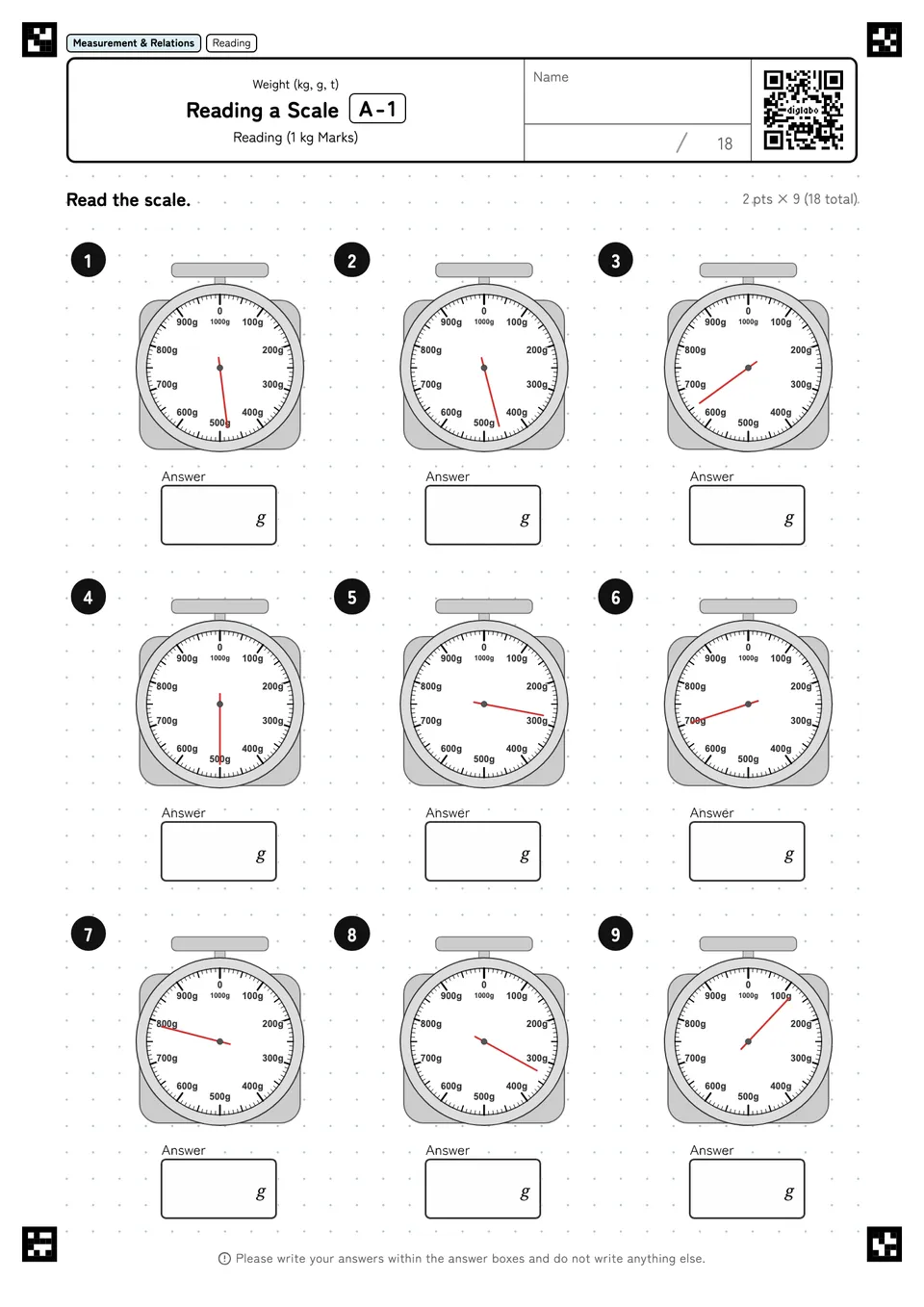
- Reading a Scale · 1kg3 questions
- Reading a Scale · 2kg3 questions
- Reading a Scale · 4kg3 questions
Questions & answers
What to do next
More worksheets in this unit
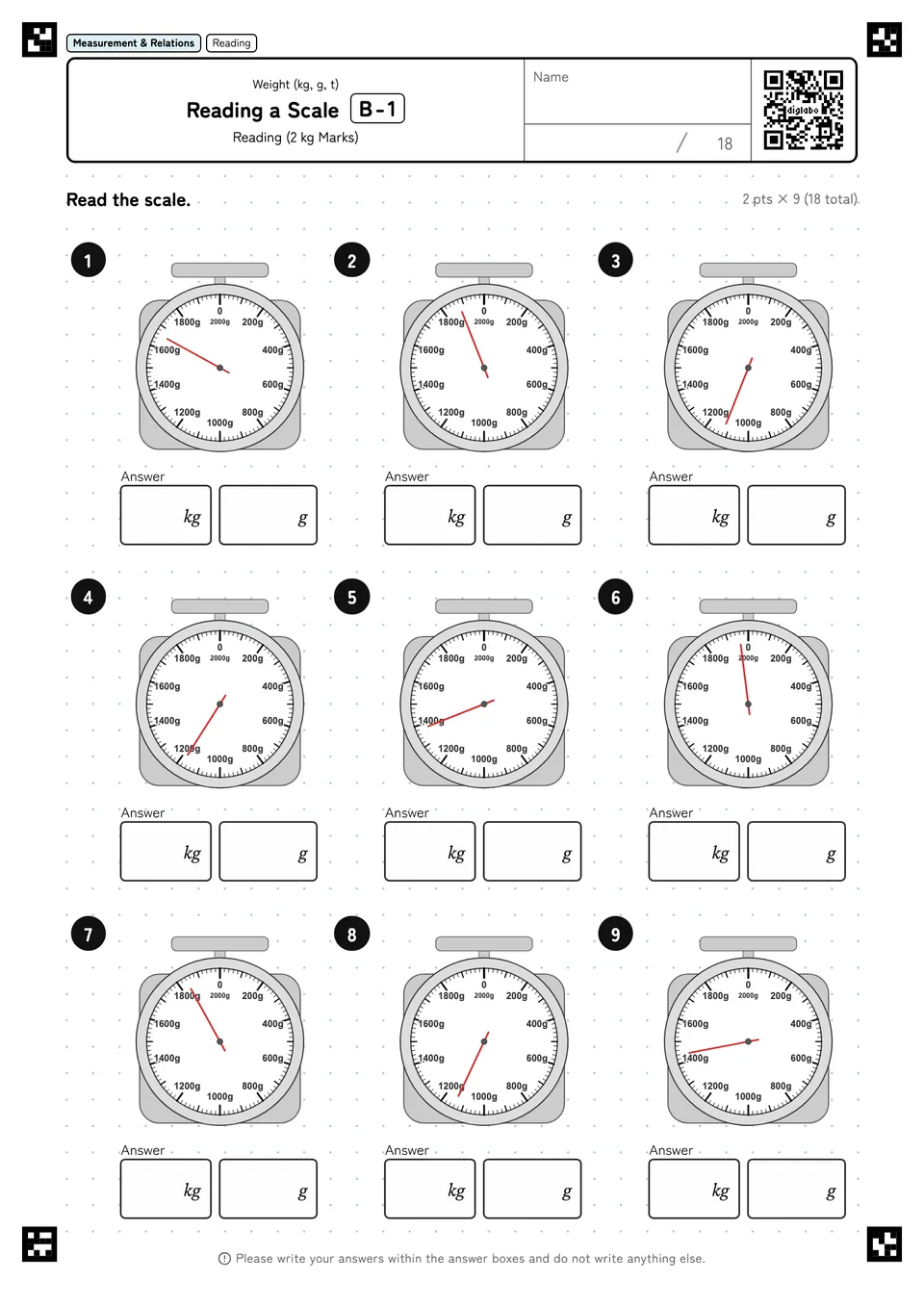 Reading a ScaleReading a Scale Reading (2 kg Marks)
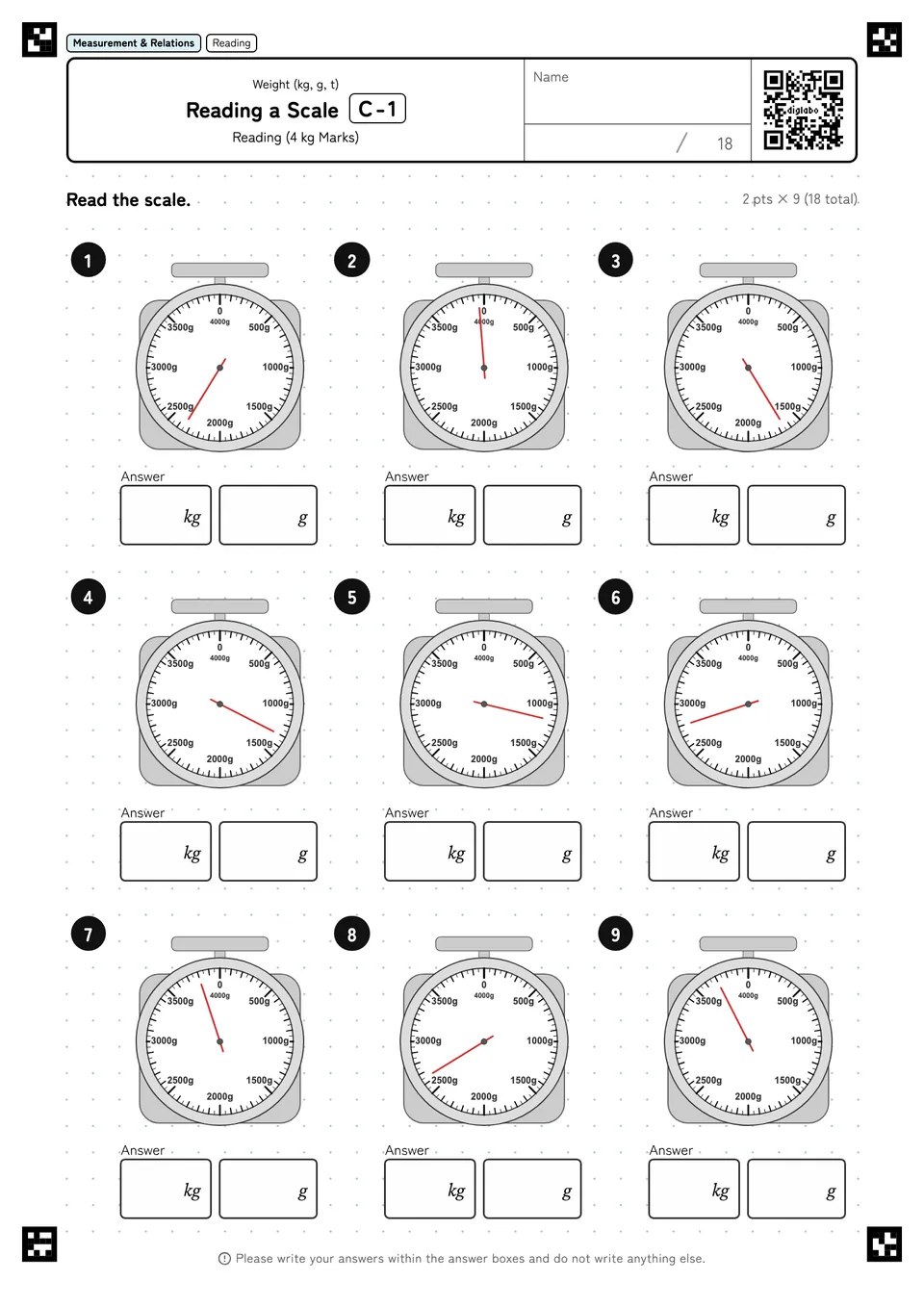 Reading a ScaleReading a Scale Reading (4 kg Marks)
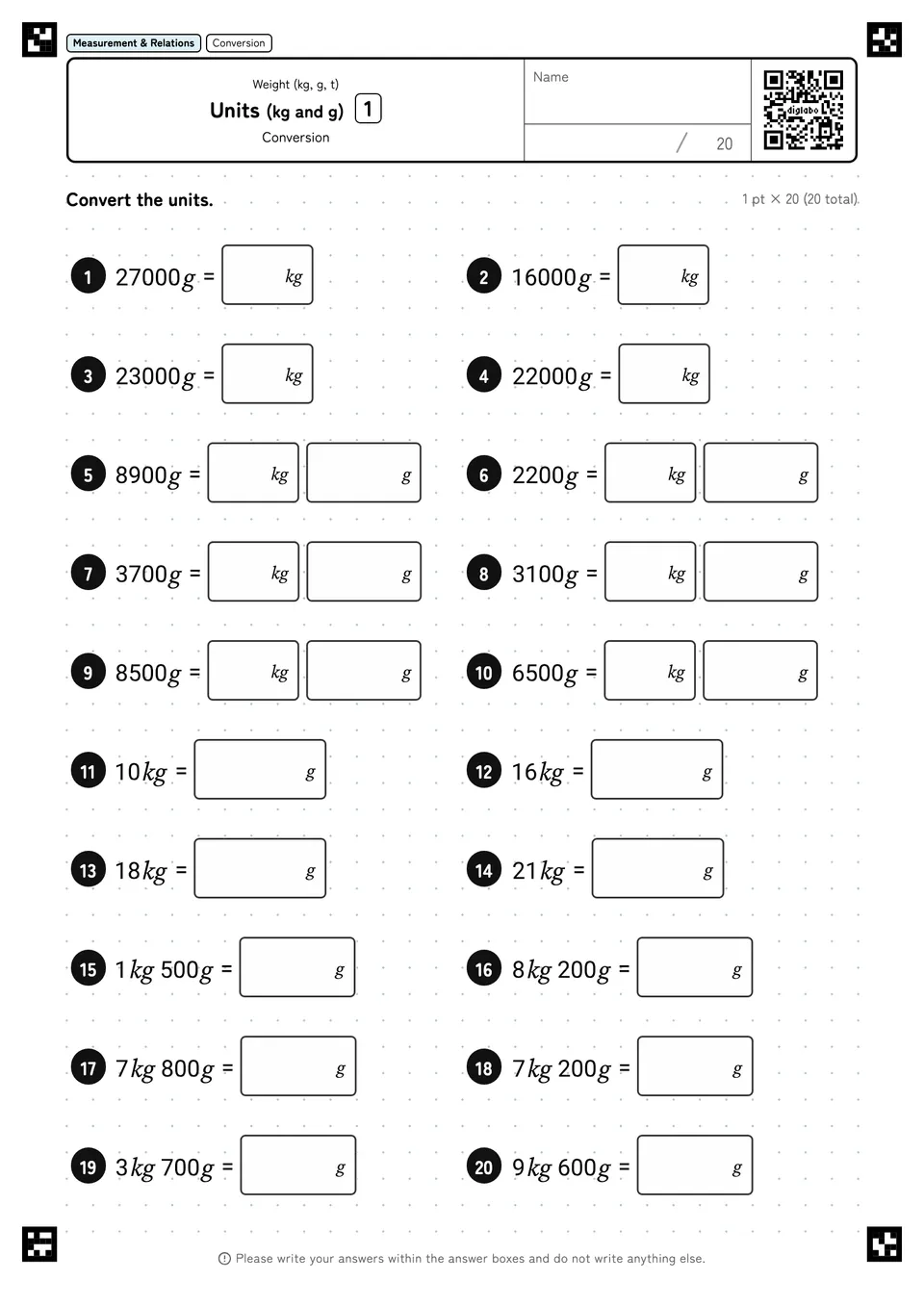 Units (kg and g)Units (kg and g) Conversion
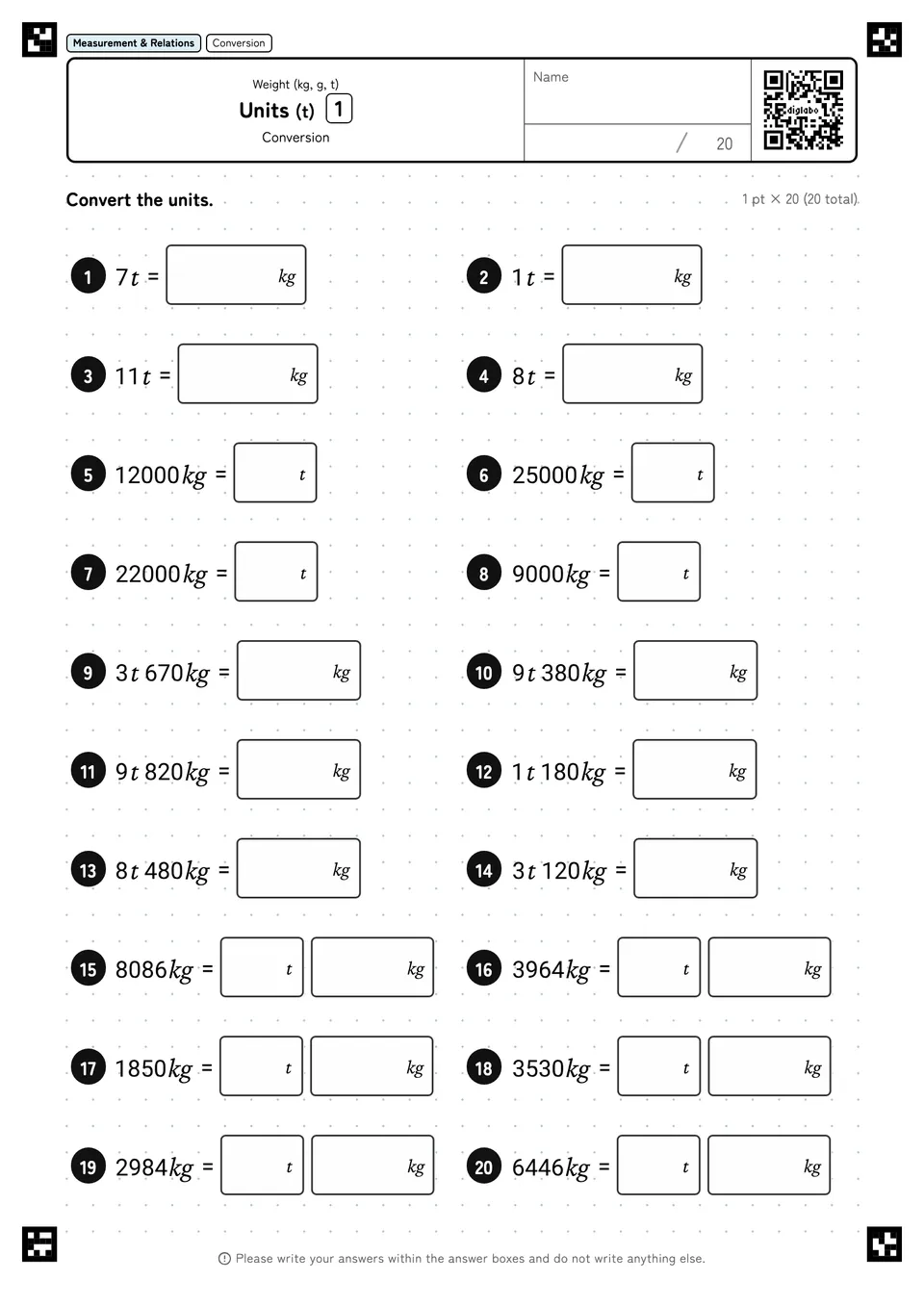 Units (t)Units (t) Conversion
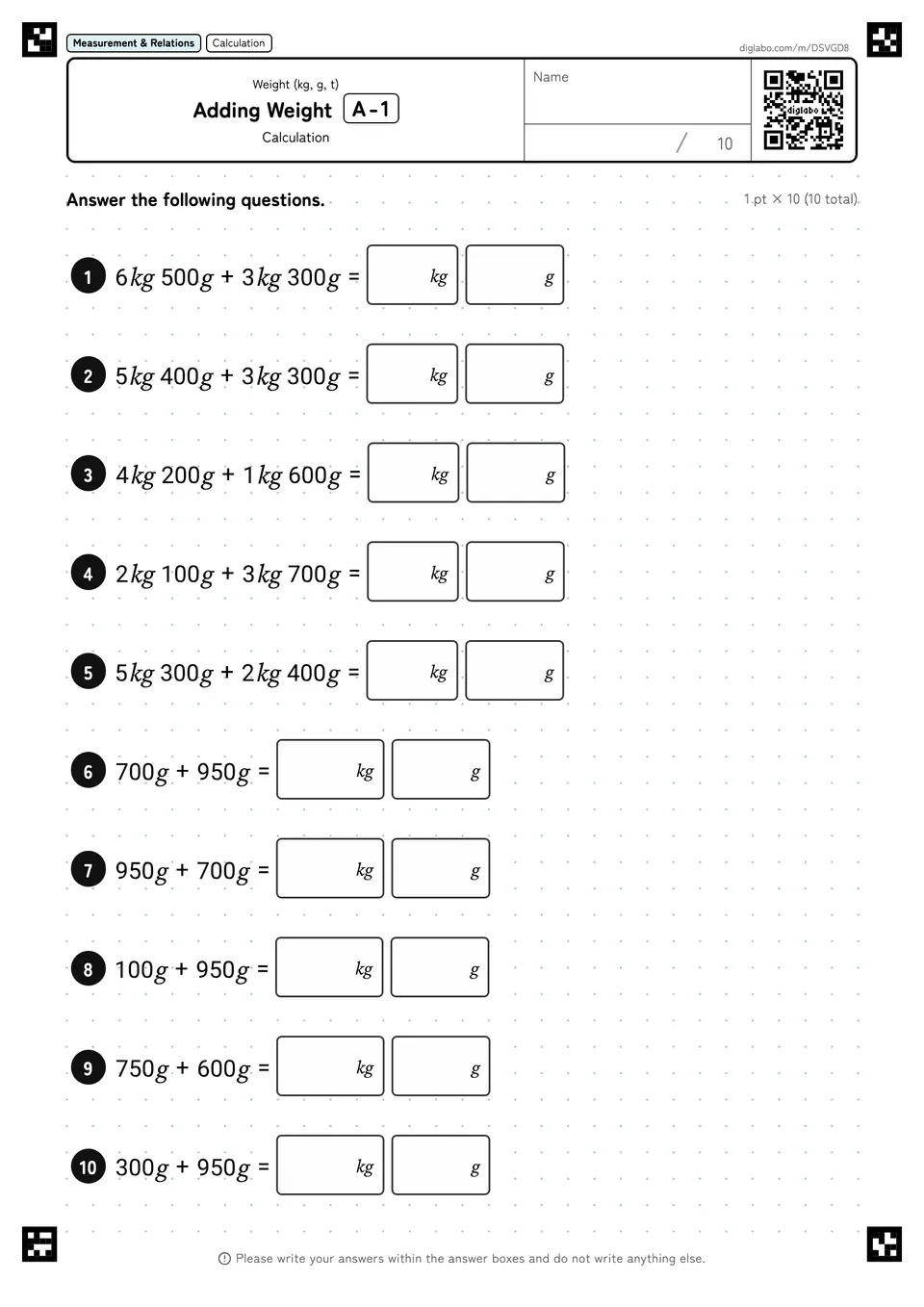 Adding WeightAdding Weight Calculation
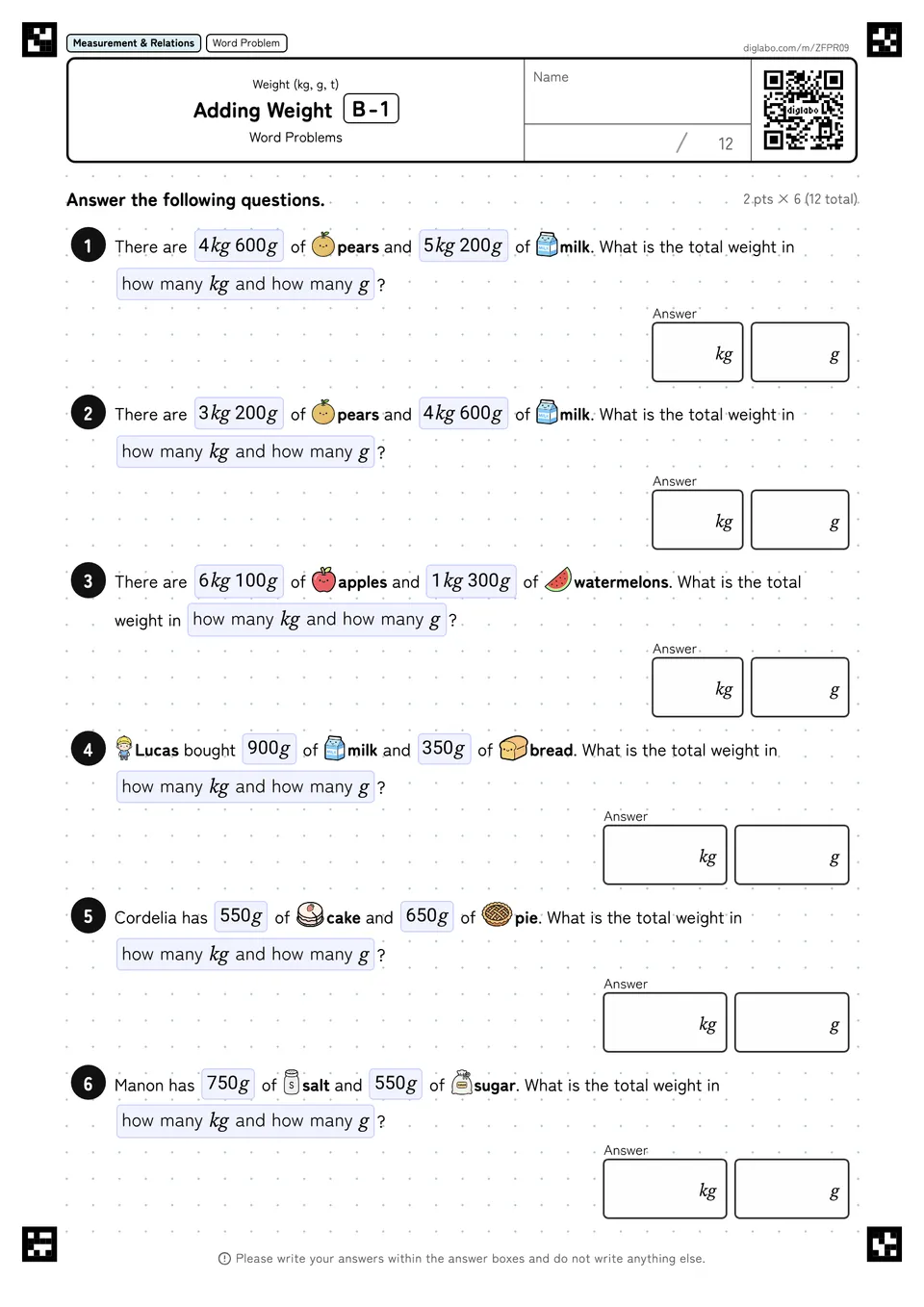 Adding WeightAdding Weight Word Problems
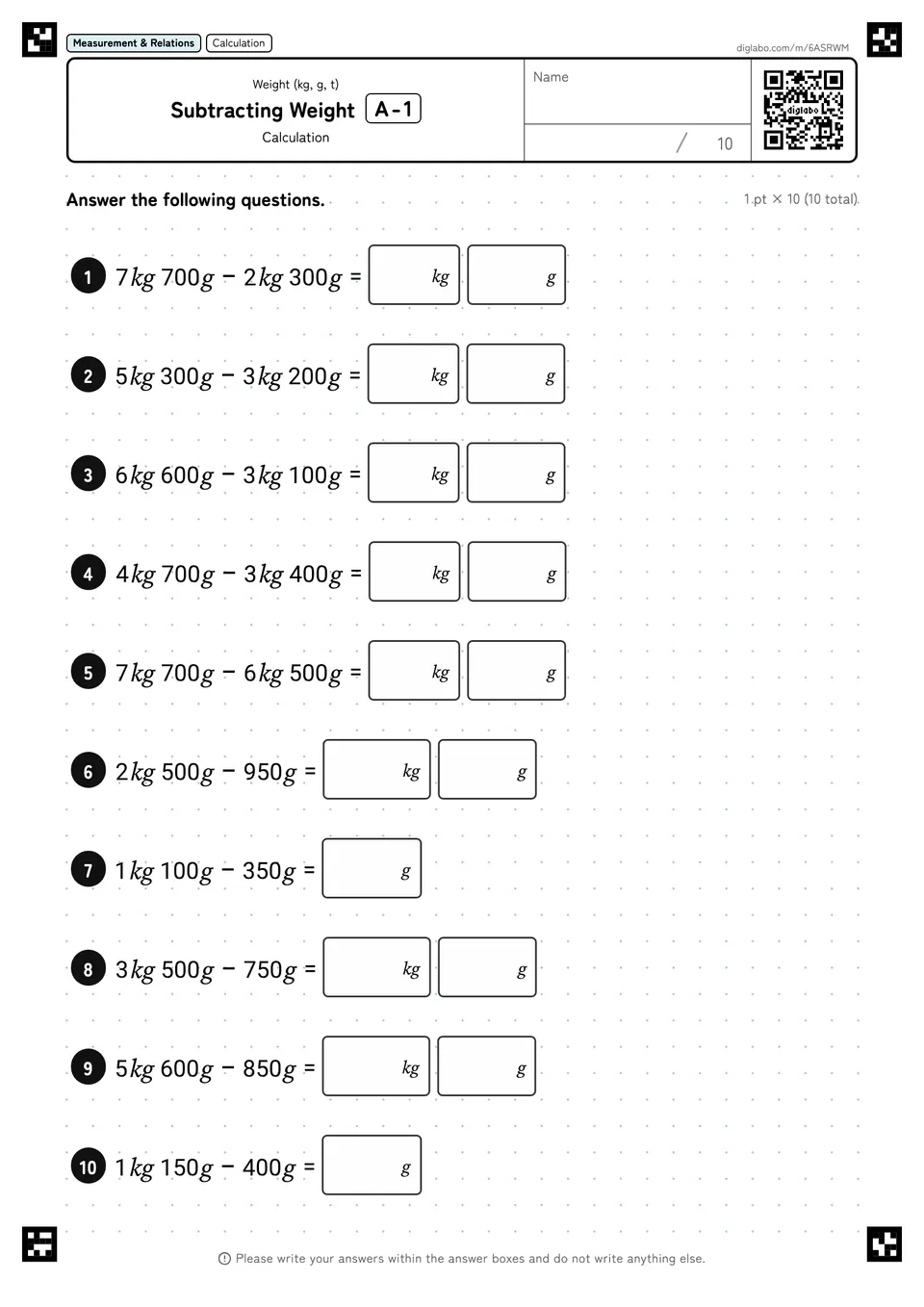 Subtracting WeightSubtracting Weight Calculation
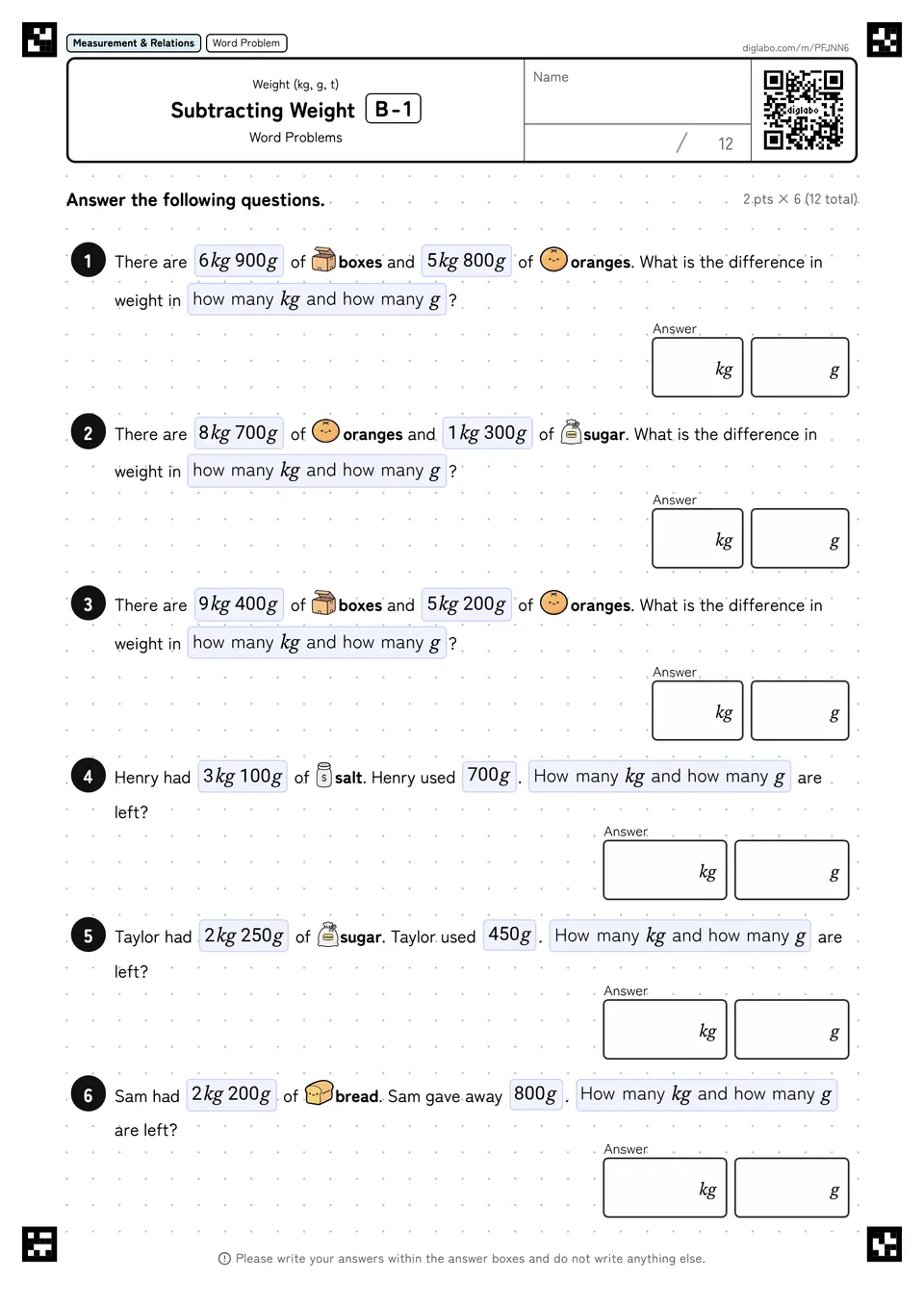 Subtracting WeightSubtracting Weight Word Problems
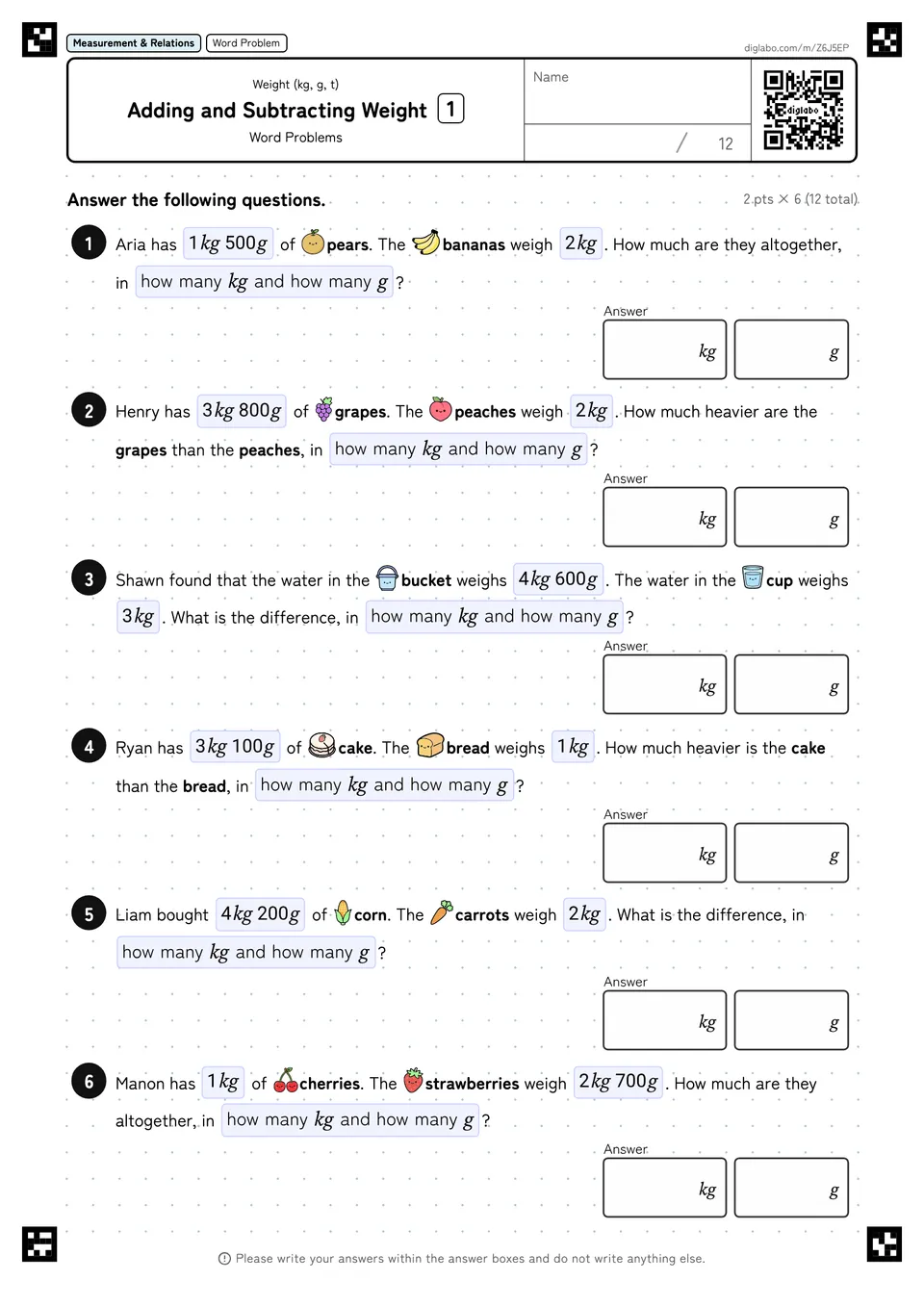 Adding and Subtracting WeightAdding and Subtracting Weight Word Problems
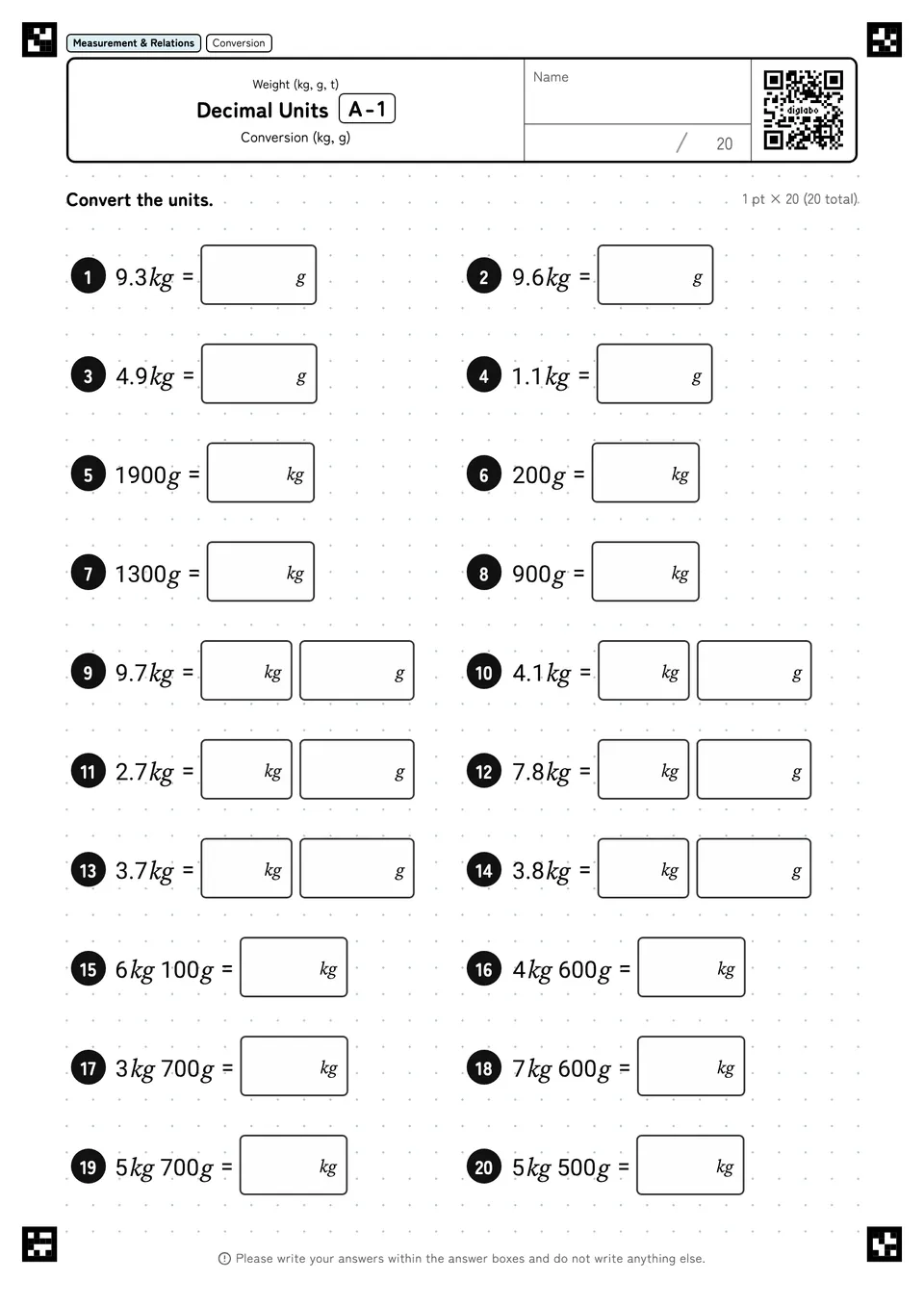 Decimal UnitsDecimal Units Conversion (kg, g)
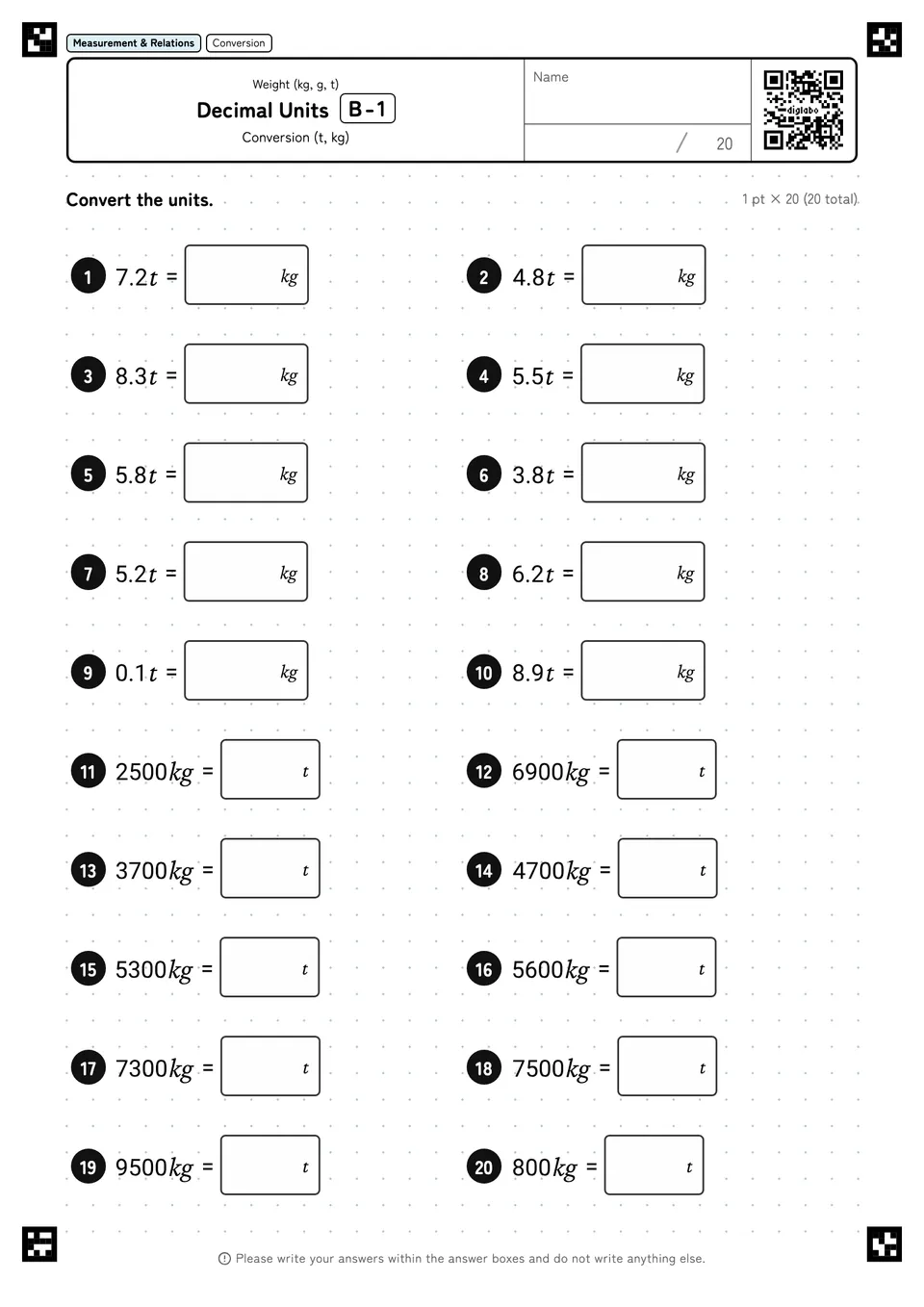 Decimal UnitsDecimal Units Conversion (t, kg)
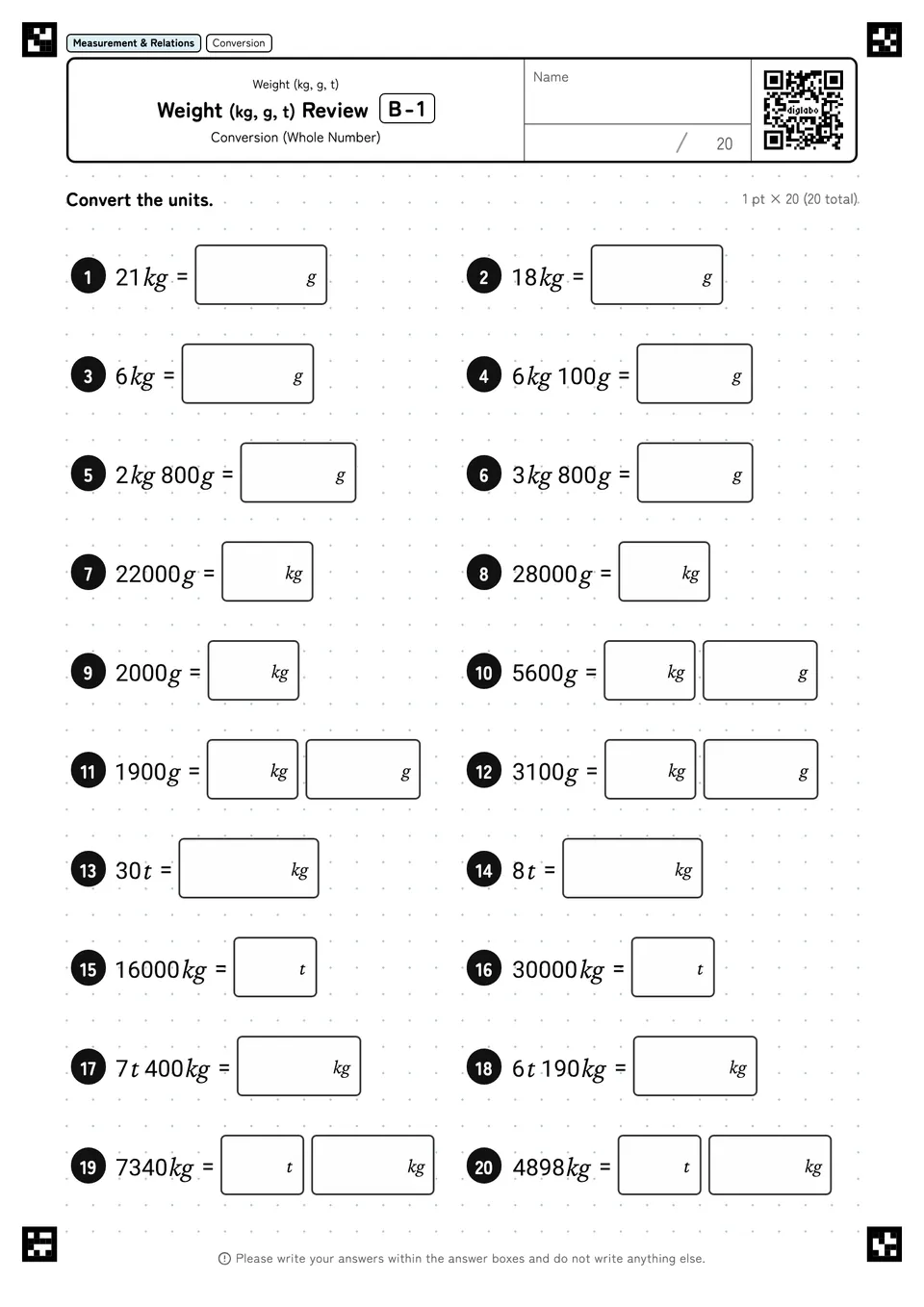 Weight (kg, g, t) ReviewWeight (kg, g, t) Review Conversion (Whole Number)
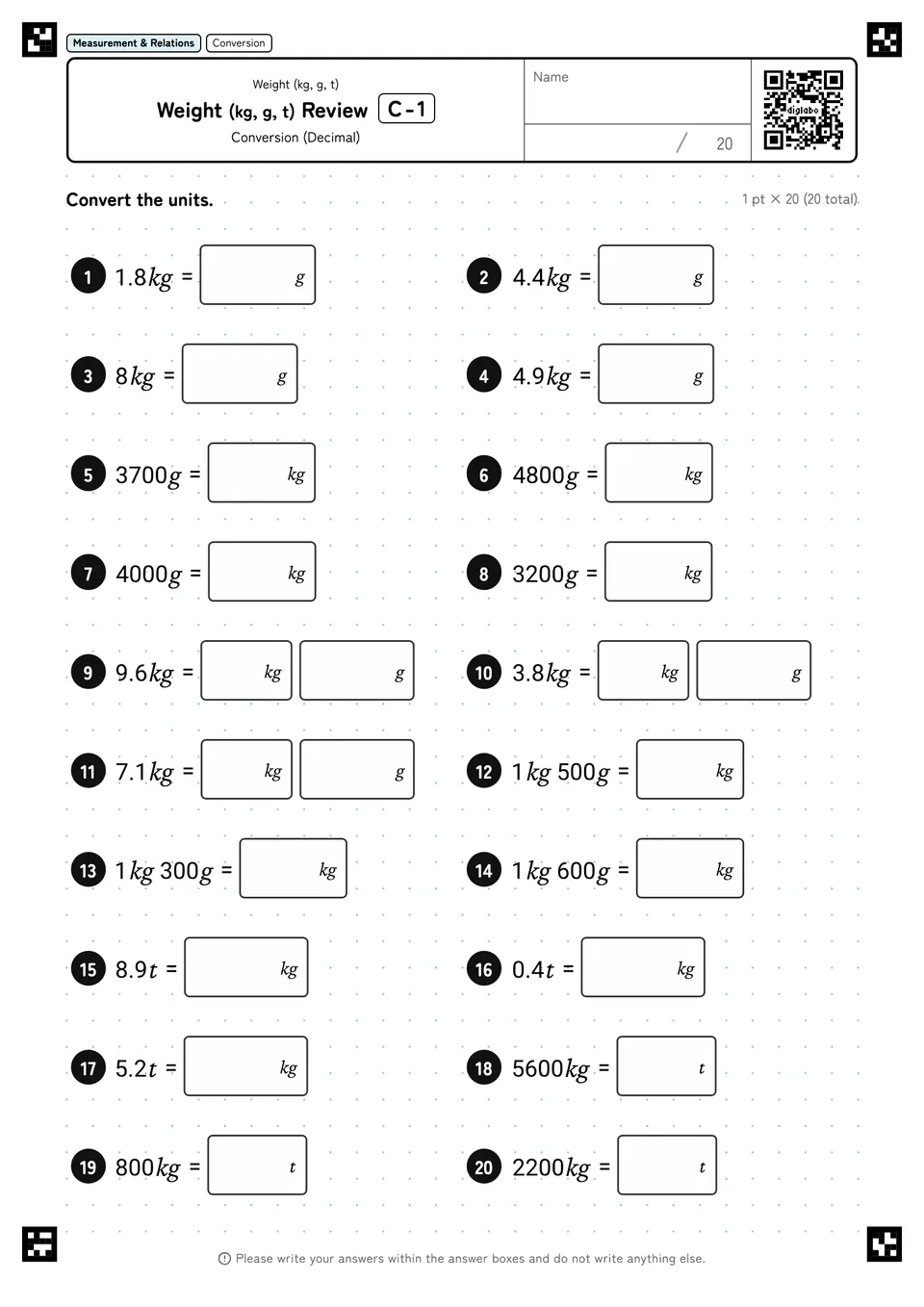 Weight (kg, g, t) ReviewWeight (kg, g, t) Review Conversion (Decimal)
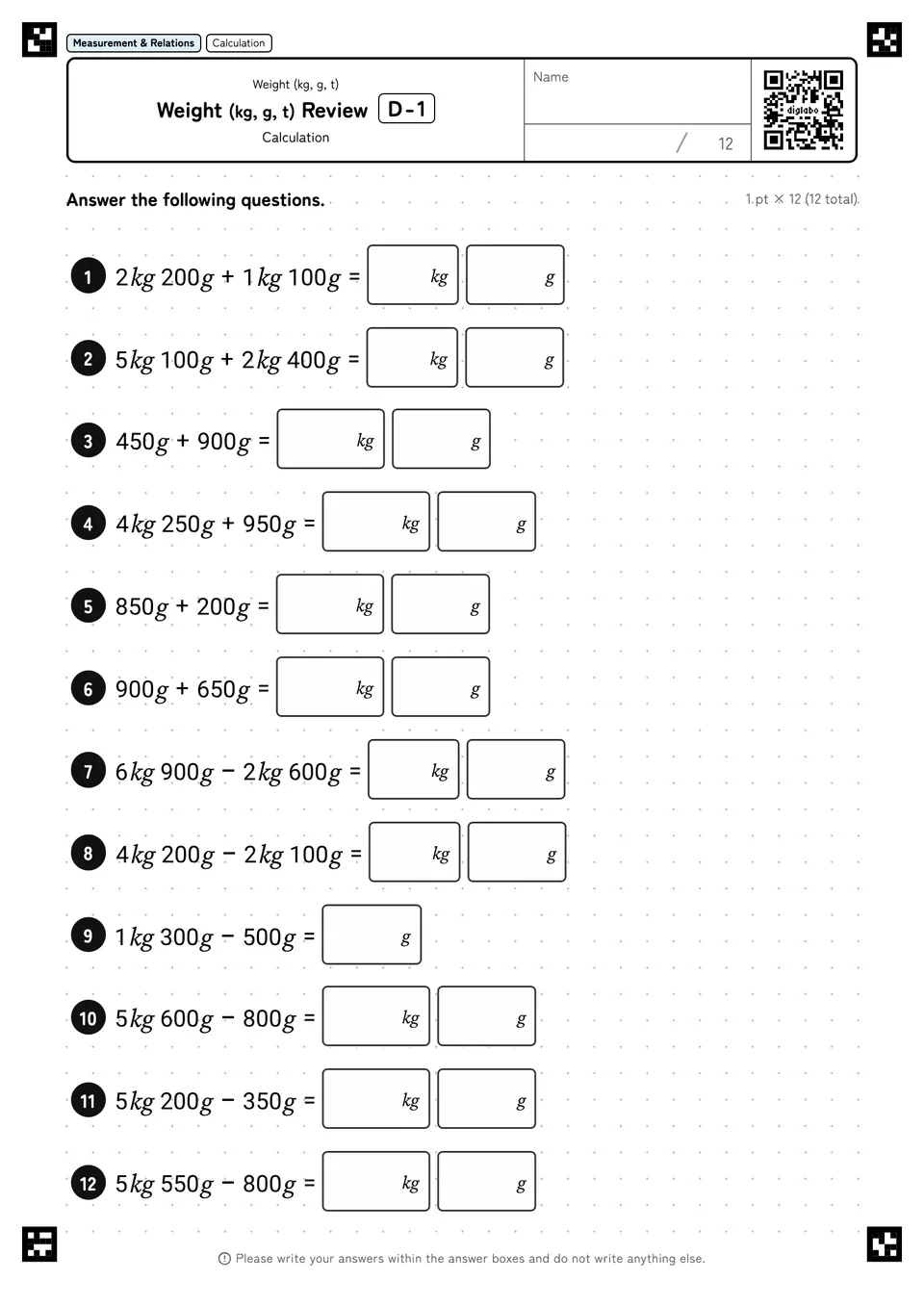 Weight (kg, g, t) ReviewWeight (kg, g, t) Review Calculation
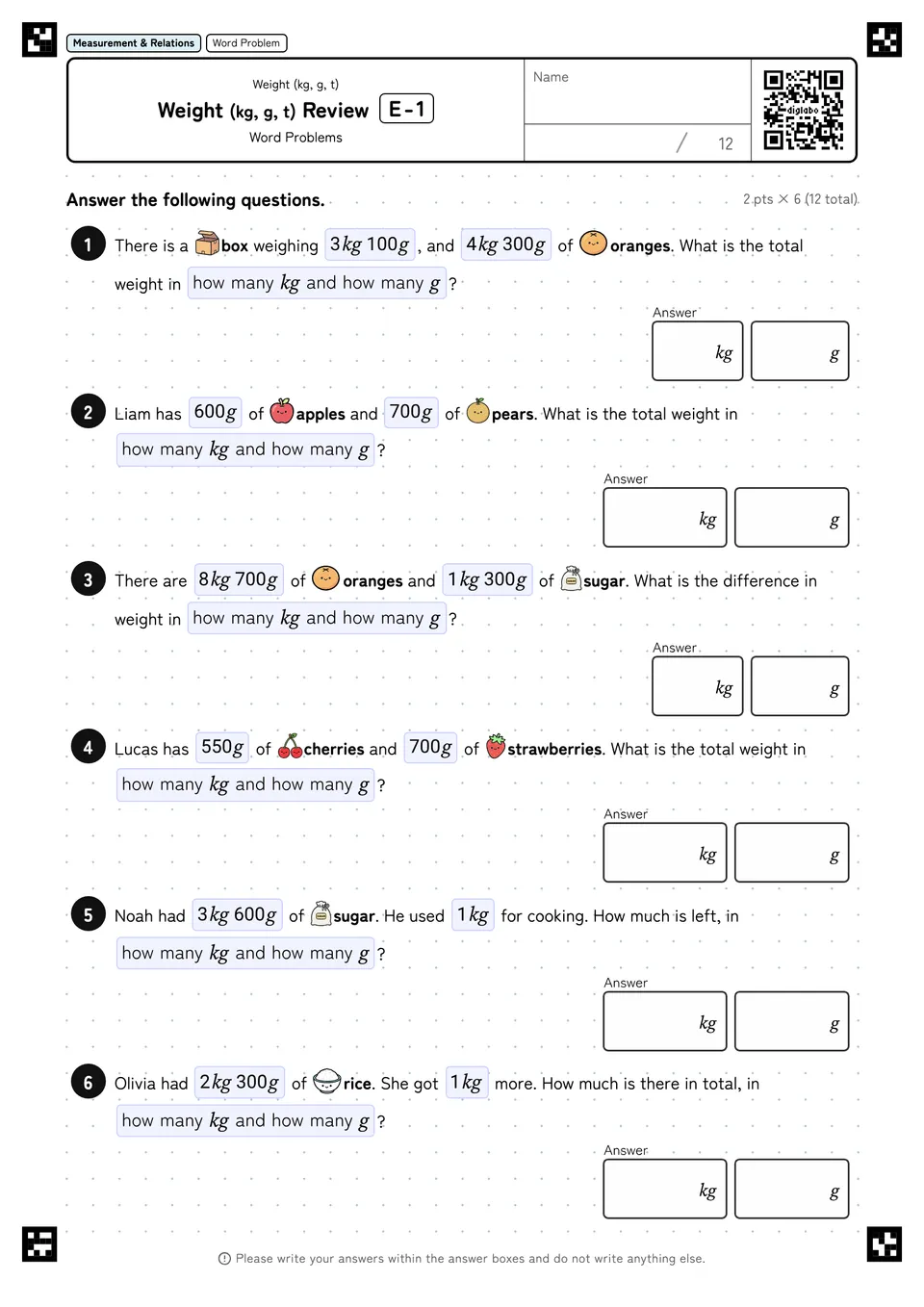 Weight (kg, g, t) ReviewWeight (kg, g, t) Review Word Problems